inquiry
Inquiry
Form loading...
0%

Picking the right low-loss Oil-immersed Transformer isn't just about glancing at those catalog ratings. It’s about the bigger picture—it’s how it impacts your electricity costs, thermal performance, how long it’ll last, and whether you can trust it to do its job smoothly. The key to a good choice starts with understanding your actual load, not some optimistic guess. You really want to measure peak demand, how things change during the day, the ambient temperature, altitude of installation, and any plans for expansion down the line. If the transformer is running well below its optimal capacity, you might be wasting money in a whole different way.

Martin J. Heathcote, who wrote The J&P Transformer Book, has a good reminder: 'A transformer is super reliable— IF you get it designed, built, installed, and maintained properly.' That’s just as true when you’re exploring low-loss oil-immersed transformers. So, don’t just rely on shiny brochures—dig into the details. Check the no-load and load losses, impedance, Insulation levels, oil quality, cooling setup, and test reports. Ask for routine tests and type-testing proof. Relying solely on marketing materials? Nah, that’s not enough.

Single-phase oil-immersed transformers, like the D11-M Series, come with some clear advantages, but remember—your choice should really be based on your local conditions. Think about whether it’s mainly for residential power, farms, workshops, or backup systems. Don’t forget to inspect the radiator, bushings, conservator, seals, and protection devices. Sometimes, small things like a loose connection or poor ventilation can wipe out any efficiency gains you were expecting. Also, take a good look at the total cost of ownership over 15 or 20 years—what seems cheap upfront might cost you more in the long run. It’s not just about price; specifications can be incomplete, and your load requirements might change over time. Be honest with yourself when reviewing assumptions, and don’t be afraid to ask your supplier for clear explanations of what’s possible and what’s not. Reputable companies like Schneider Electric or others with proven track records should guide you through the process, including maintenance, commissioning, and responsibly handling the transformer at the end of its life.
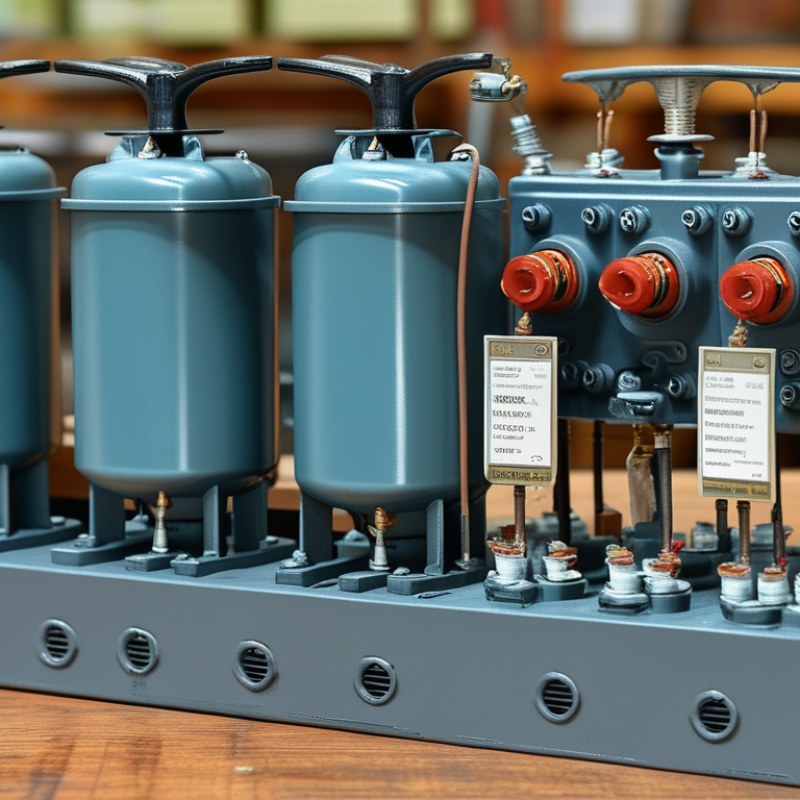
5 Tips to Choose a Low Loss Oil Immersed Transformer

Define Low-Loss Performance: No-Load and Load Loss in Watts

5 Tips to Choose a Low Loss Oil Immersed Transformer

Define Low-Loss Performance: No-Load and Load Loss in Watts

A Low Loss Transformer should be judged by measured watts, not attractive efficiency claims. No-load loss occurs whenever the core remains energized. It comes mainly from magnetic hysteresis and eddy currents. This loss continues even when the transformer supplies no equipment. Load loss appears when current flows through the windings. It includes winding resistance and additional stray losses. Load loss usually increases with the square of the current. Small errors become expensive at high demand.

Tip 1: Request no-load and load loss values separately. Check the test voltage, frequency, temperature, and applicable standard. A single “total loss” figure hides useful details. Tip 2: Compare losses at realistic loading points. A transformer operating near 70% load may perform differently from one tested at full load. Review the watts, not only the percentage efficiency. This is where many purchasing decisions become too simple.

Tip 3: Examine the guaranteed temperature conditions. Copper resistance changes as windings heat, so load-loss readings need a clear reference temperature. Tip 4: Ask for routine test records and independent verification when the project is critical. Experienced engineers also inspect oil quality, cooling paths, and connection tightness. These details affect actual performance. Tip 5: Calculate annual energy cost using local operating hours. The cheapest purchase can produce higher lifetime losses. I have seen specifications look excellent, yet the assumptions were incomplete. Recheck them.

Match Rated Capacity: Select kVA from 30%–80% of the Peak Load

5 Tips to Choose a Low Loss Oil Immersed Transformer

Match Rated Capacity: Select kVA from 30%–80% of the Peak Load

Choosing the correct kVA rating starts with real load information. Review measured demand, motor starting currents, seasonal changes, and planned equipment. A practical planning range may use 30%–80% of the connected or forecast peak load when diversity is proven. However, the transformer must never fall below the verified maximum demand. That distinction matters.

For example, a facility with a 1,000 kW connected load may not operate everything simultaneously. If its recorded peak demand is 600 kW, a transformer near the calculated demand may be suitable after applying power factor and growth allowances. Engineers should convert the result into kVA, not rely on kW alone. A 0.85 power factor increases the required rating.

Do not size from a single afternoon reading. Check utility bills, clamp-meter data, and motor starting behavior. Oil temperature and ambient conditions also affect usable capacity. Leave reasonable headroom for future expansion, but avoid excessive oversizing. An oversized transformer may operate lightly loaded, increasing installation cost and reducing efficiency.

The 30% figure can be too optimistic.

I have seen designs based on optimistic forecasts. They later required costly upgrades. Verify the numbers with a qualified electrical engineer and follow applicable installation standards. Clear records make the decision more reliable.

Compare Core Materials: Grain-Oriented Steel Can Cut No-Load Loss

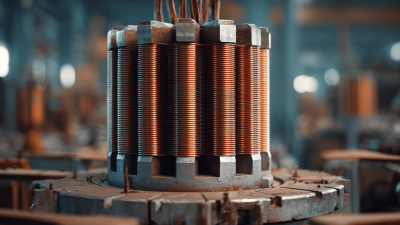
When selecting low loss transformers, inspect the core before comparing price or enclosure details. The core remains energized continuously, even when the transformer supplies little current. That creates no-load loss, often called core loss.

Grain-oriented steel improves magnetic performance by aligning its crystal structure with the flux direction. High-grade, domain-refined GO steel can reduce hysteresis loss compared with conventional electrical steel. The actual reduction depends on thickness, coating, joint design, and operating flux density. Small details matter. A poorly built step-lap joint can waste the advantage of premium material.

The U.S. Department of Energy’s Distribution Transformer Technical Support Document models distribution systems around a 30% average load factor. This supports closer attention to no-load performance, not only copper loss at rated load. European Ecodesign requirements, including Regulation (EU) 2019/1783, also set measurable limits for transformer losses. Ask for certified test results under IEC 60076 procedures. Check the no-load loss in watts, not vague claims about “high efficiency.” In field assessments, I would compare the guaranteed value with the measured factory value and the proposed flux density. The comparison is not always comfortable. Sometimes a slightly larger core delivers better lifetime economics than a cheaper design. Payback depends on electricity price, annual energization hours, and the transformer's real load profile. Fancy specifications alone prove little.

5 Tips to Choose a Low Loss Oil Immersed Transformer - Compare Core Materials: Grain-Oriented Steel Can Cut No-Load Loss

The values below are typical engineering ranges for transformer core materials, not guaranteed product specifications. Core-loss figures are shown at their stated test conditions because flux density and frequency strongly affect the result.

Core Material Typical Core-Loss Range Reference Test Condition Approximate Saturation Induction Typical Lamination Thickness Main Advantages Important Limitations Recommended Selection Scenario
Conventional Grain-Oriented Electrical Steel (GOES) Approximately 0.90–1.30 W/kg 50 Hz, around 1.70 T; actual values depend on grade, cutting, and joint quality Approximately 1.90–2.05 T About 0.23–0.30 mm Mature manufacturing technology, high magnetic flux capability, good mechanical strength, and broad availability. Higher no-load loss than advanced high-permeability GO steel or amorphous metal; punching and assembly can increase local loss. General-purpose distribution and power transformers where cost, compactness, and robust manufacturing are priorities.
High-Permeability Grain-Oriented Electrical Steel Approximately 0.75–1.05 W/kg 50 Hz, around 1.70 T; verify the exact grade and guaranteed loss value Approximately 1.90–2.05 T About 0.18–0.27 mm Lower hysteresis loss and improved permeability compared with conventional GO steel; retains a high operating flux capability. Usually costs more than conventional GO steel; performance is sensitive to stress, burrs, cutting damage, and joint design. Low-loss oil-immersed transformers requiring reduced no-load loss without a major increase in core size.
Laser-Scribed or Domain-Refined GO Steel Approximately 0.65–0.90 W/kg 50 Hz, around 1.70 T; values vary with domain-refinement treatment and processing Approximately 1.90–2.05 T About 0.18–0.23 mm Can reduce specific core loss while preserving the high saturation capability and familiar design approach of GO steel. Requires controlled processing and careful handling; the benefit can be reduced by mechanical stress or poor core joints. High-efficiency transformers where a compact core and lower no-load loss are both required.
Amorphous Metal Approximately 0.10–0.30 W/kg 50 Hz, commonly evaluated near 1.30–1.40 T; do not compare directly with GO values at 1.70 T Approximately 1.50–1.60 T About 0.02–0.03 mm Very low no-load core loss because of its thin, non-crystalline structure; especially effective when the transformer remains energized for long periods. Lower saturation induction, greater sensitivity to mechanical stress, more specialized core fabrication, and potentially larger core dimensions. Distribution transformers focused on lifetime energy savings and applications with high annual energization hours.
Conventional Non-Oriented Electrical Steel Often above 2.00 W/kg at comparable power-frequency test conditions Typically evaluated around 1.50 T at 50 Hz; exact results depend strongly on grade Approximately 1.60–2.00 T About 0.20–0.50 mm Isotropic magnetic behavior and suitability for rotating electrical machines and certain specialized magnetic components. Generally not the preferred material for minimizing no-load loss in conventional 50/60 Hz oil-immersed transformer cores. Use only when the magnetic design or supply chain specifically requires non-oriented electrical steel.
Design and Processing Factor May change measured core loss by roughly 5–20% or more in poorly controlled designs Depends on stacking factor, joint design, cutting method, clamping pressure, and operating flux density Not applicable Not applicable Step-lap joints, accurate cutting, low mechanical stress, suitable insulation coating, and controlled clamping help preserve material performance. A premium steel grade cannot compensate for excessive flux density, damaged edges, poor joints, or unnecessary core vibration. Evaluate the complete core assembly and guaranteed no-load loss, not only the material name or nominal steel grade.

Selection reminder: for a fair comparison, request no-load loss at the same rated frequency, voltage, waveform, temperature, and measurement standard. No-load loss is primarily associated with the core, while load loss is mainly related to winding resistance and stray losses.

Evaluate Efficiency: Target 98%–99.5% at the Operating Load

When selecting an Oil Immersed Transformer, efficiency must match the real operating load. Target 98%–99.5% at that load, not only at the rated nameplate capacity. A transformer rated 1,000 kVA may operate near 650 kVA for most of the day. Its measured performance there matters more than an impressive full-load figure.

Tip: Request separate no-load and load-loss values from the manufacturer. No-load losses continue when the transformer is energized, even during quiet production hours. Load losses rise with current and temperature. Review test reports completed under recognized standards. Also check the guaranteed tolerance, because small differences become expensive over twenty years.

Tip: Build an hourly load profile before comparing quotations. Include motor starts, seasonal peaks, night operation, and the site’s ambient temperature. A unit showing 99.3% efficiency at one point may perform differently at 40% load. Look closely. I have seen calculations ignore auxiliary fans, cable losses, and lightly loaded periods. That mistake is easy to repeat.

Tip: Compare total ownership cost, not purchase price alone. Ask for efficiency data at 25%, 50%, 75%, and 100% load. Confirm the cooling method and temperature-rise rating. Better cooling can reduce thermal stress, but it may add operating energy. The best choice is not always the largest transformer. Oversizing can increase continuous core losses, while undersizing creates heat and unnecessary voltage drop. That balance deserves a careful review.

Check Impedance: Balance Voltage Drop, Fault Current, and System Stability

5 Tips to Choose a Low Loss Oil Immersed Transformer

Impedance deserves careful attention when selecting an Industrial Transformer With Oil Immersed Cooling System. It directly affects voltage drop, fault current, and system stability. A lower impedance can support stronger voltage regulation during heavy motor starting. However, it may also allow higher fault currents through downstream equipment. That trade-off is easy to underestimate.

Review the transformer’s rated impedance against the network short-circuit level. Ask the manufacturer for test data, not only catalog values. IEC 60076-based reports can help verify performance and tolerance limits. During site inspections, compare the nameplate value with the approved design drawings. Small differences matter. Cable length, parallel transformers, and generator operation can change the real result.

For a long feeder, excessive impedance may leave lamps dim and motors slow during peak demand. For a compact industrial bus, very low impedance may increase breaker stress. Coordination studies should check both normal voltage drop and worst-case fault current. I have seen projects focus on efficiency while overlooking protection settings. That mistake can create expensive revisions later. Recheck the calculation after future load expansion is considered. Real systems rarely remain unchanged.

Verify Standards: Require IEC 60076 Tests and Guaranteed Loss Data

5 Tips to Choose a Low Loss Oil Immersed Transformer

Verify Standards: Require IEC 60076 Tests and Guaranteed Loss Data

A low-loss oil immersed transformer should come with more than a polished efficiency claim. Ask for test evidence aligned with the relevant IEC 60076 requirements. The documentation should identify routine tests, type tests, and any special tests clearly. Check the serial number, rated voltage, frequency, impedance, and test date. Small mismatches can create expensive disputes later.

Demand guaranteed no-load and load-loss values at the specified tap and reference temperature. These figures should appear in the contract, not only in a sales quotation. Request the permitted tolerances, measurement method, and correction formula. An independent witness can observe factory testing when the project budget allows. It adds confidence, though it does not replace careful document review.

Look closely at the test report.

During technical evaluations, engineers often focus on purchase price and overlook lifetime losses. A transformer with slightly higher initial cost may consume less energy for decades. However, guaranteed data can still be misunderstood if operating conditions differ from factory conditions. Confirm how losses change with loading, oil temperature, and tap position. I have found that even experienced teams sometimes accept rounded figures too quickly. That is worth questioning. Ask for raw measurement records, calibration certificates, and a clear explanation of any deviation from the guarantee. Reliable suppliers should answer without vague language.

Low Voltage Cable Branch Box DFX: Market Insights from MarketsandMarkets and Grand View Research Reports

The low-voltage cable branch box market is gaining attention as urban grid upgrades, rural electrification, municipal construction, and residential development increase demand for safer and more flexible power distribution equipment. Industry research highlights a growing preference for compact, weather-resistant solutions that can support dry cable branching, feeder protection, and simplified maintenance. Demand is also being encouraged by the expansion of high-rise buildings, smart infrastructure, and distributed power networks, where reliable low-voltage connections are essential.

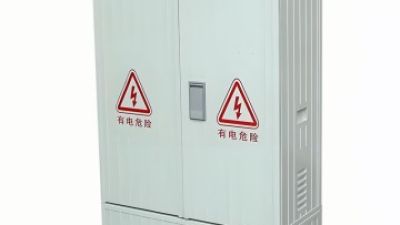
The DFX low-voltage cable distribution box is designed to meet these requirements in demanding outdoor and utility environments. Its enclosure is molded from SMC composite material through high-temperature compression, providing strong resistance to impact, bending, aging, abrasion, and corrosion. High insulation, arc resistance, and flame resistance enhance operational safety, while the compact structure supports convenient installation and efficient use of limited space.

Equipped with knife-fuse switches, MCCBs, strip switches, and busbars, the DFX series can be configured for different branch and feeder protection needs. It is suitable for urban and rural power grids, municipal projects, residential communities, and high-rise buildings. As infrastructure operators increasingly prioritize durability, safety, and lifecycle efficiency, this type of low-voltage branch box offers a practical option for modern distribution systems.

FAQS

How should I choose the transformer’s rated capacity?

Review measured demand, motor starting currents, seasonal changes, and planned equipment. A practical range may use 30%–80% of connected or forecast peak load when diversity is proven. Never select below verified maximum demand.

Can I size a transformer from connected load alone?

No. A facility may have 1,000 kW connected but only 600 kW recorded peak demand. Check utility bills, clamp-meter readings, and operating schedules before choosing the rating.

Why must kW be converted to kVA?

Transformer capacity is normally expressed in kVA. At a 0.85 power factor, the required kVA is higher than the measured kW. Ignoring power factor may cause overheating or voltage drop.

Is the 30% planning figure always reliable?

No. The 30% figure can be too optimistic. Production changes, motor starts, or new equipment may quickly consume spare capacity. Verify the forecast with a qualified electrical engineer.

How much future capacity should I leave?

Leave reasonable headroom for planned expansion. Avoid excessive oversizing, because lightly loaded operation can increase installation costs and continuous core losses. Not always.

What efficiency should I target at the operating load?

Target about 98%–99.5% at the actual operating load, not only at rated capacity. A transformer operating near 650 kVA may matter more than its full-load result.

Which loss figures should I request?

Request separate no-load and load-loss values. No-load losses continue while the transformer remains energized. Load losses increase with current and temperature. Ask for recognized test reports and guaranteed tolerances.

How can I compare transformer quotations fairly?

Build an hourly load profile covering motor starts, seasonal peaks, night operation, and ambient temperature. Compare efficiency at 25%, 50%, 75%, and 100% load. Include cooling energy, maintenance, and long-term ownership costs. I would not trust one impressive efficiency number.

Conclusion

Choosing a low loss oil immersed transformer requires more than comparing purchase prices. Start by distinguishing no-load loss, which occurs whenever the transformer is energized, from load loss, which increases with current and should be measured in watts. Select a rated capacity that generally covers about 30%–80% of the system’s peak load, allowing efficient operation without excessive oversizing. Core material is also important: high-quality grain-oriented steel can significantly reduce no-load losses. At the expected operating load, aim for an efficiency of approximately 98%–99.5%, depending on the transformer’s size and application.

Impedance should be reviewed carefully because it affects voltage drop, available fault current, and overall system stability. A suitable design must balance these factors rather than optimizing only one of them. Finally, request documented IEC 60076 testing and guaranteed loss data so the stated performance can be verified. By evaluating capacity, materials, efficiency, impedance, and test evidence together, users can select a low loss oil immersed transformer that supports reliable operation and lower long-term energy consumption.

Ethan

Ethan

Ethan is a seasoned marketing professional at Jiangxi GUOXIANG Electric Power Equipment Co., Ltd., a national high-tech enterprise founded in 2016 and based in Jiangxi Province. With a profound expertise in integrated power solutions, Ethan plays a crucial role in bridging the gap between our......
Previous China Best 1250kVA 10kV 11kV 22kV Transformer?