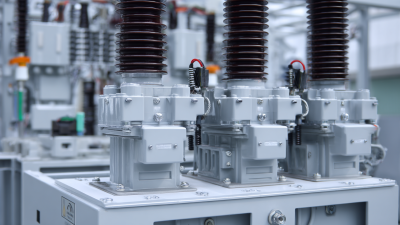
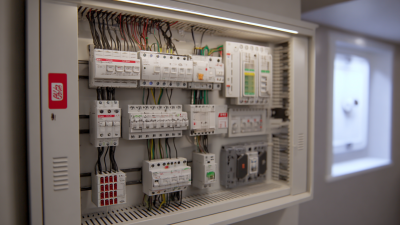
The Three Phase Electric System is really a cornerstone in modern electrical engineering — it’s a game-changer when it comes to making things run more smoothly and reliably across all sorts of applications. I read somewhere that Dr. Emily Carter, who’s pretty much an expert at the Energy Research Institute, once said, 'The beauty of the Three Phase Electric System lies in its ability to deliver power more uniformly and efficiently compared to single-phase systems.' That stuck with me because it really highlights why understanding three-phase power is so important, especially in big industrial setups where things can get pretty high-stakes.
In this upcoming discussion, we’ll take a closer look at some of the main perks of using a three-phase system — like how it improves motor performance and keeps equipment running without a hitch. This is a big deal for industries that can’t afford power outages. By spreading out the electrical load evenly, this setup helps prevents overloads and actually helps machinery last longer. We’ll also chat about when and where this system works best — think renewable energy projects and smart grids — because let’s face it, those are becoming such a big part of our energy future. Overall, our goal here is to show that the Three Phase Electric System isn’t just some technical choice; it’s a smart move for businesses that want to stay ahead and operate at their best.
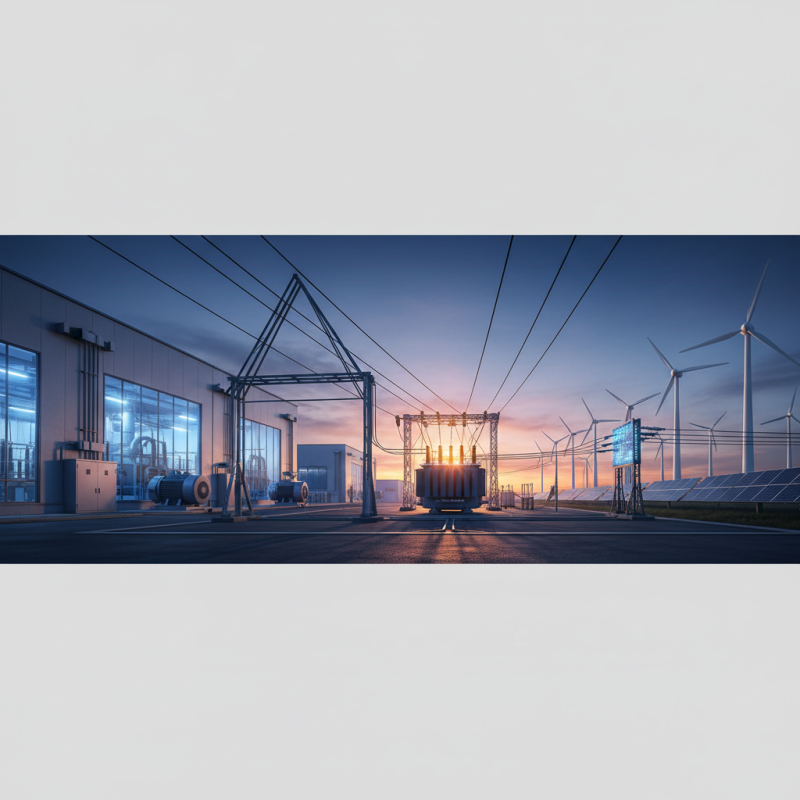
What is a Three Phase Electric System?
A three-phase electric system is an advanced method of alternating current (AC) electricity delivery that utilizes three separate alternating currents, each phase offset by 120 degrees. This configuration allows for a continuous power flow, making it more efficient for transmitting large amounts of electric power over long distances. According to the U.S. Department of Energy, about 70% of the electrical energy produced in the country is delivered via three-phase systems, underscoring its importance in industrial and commercial applications.
The benefits of a three-phase electric system include improved Power Distribution and reliability. Each phase carries a portion of the total power load, which results in a balanced system that reduces the risk of voltage drops and increases the overall efficiency of power usage. Additionally, equipment powered by a three-phase system typically experiences less vibration and longer lifespans due to smoother operation. A report by the International Electrotechnical Commission (IEC) indicates that three-phase systems can be up to 30% more efficient than single-phase systems, making it the preferred choice for heavy machinery and industrial applications.
In practical terms, the three-phase electric system is widely adopted in manufacturing plants, commercial buildings, and high-density electrical environments. Its versatility allows for the operation of various loads, such as motors and transformers, at higher capacities compared to single-phase systems. As noted in industry surveys, more than 60% of industrial facilities prefer three-phase systems for their capacity to handle increased electrical demands without compromising performance, signaling a strong trend towards more efficient energy use in modern electrical grids.
Historical Development of Three Phase Systems
The historical development of three-phase electric systems traces back to the late 19th century, a period marked by the quest for improved efficiency in power distribution. Innovators like Nikola Tesla and George Westinghouse championed the three-phase system, which enabled the transmission of electrical energy over long distances with reduced losses. Modern assessments indicate that three-phase systems can transmit electricity with 1.5 times the power of single-phase systems while maintaining a lower overall electrical loss. According to the International Energy Agency, an estimated 60% of global electricity transmission now relies on the three-phase system, highlighting its significant role in today’s energy landscape.
The evolution of three-phase systems has propelled numerous industrial applications, particularly in electric motors, which are essential to manufacturing processes. It is estimated that three-phase motors make up approximately 90% of all industrial motor applications, contributing to enhanced efficiency and reliability. Additionally, the ability to balance loads across multiple phases reduces the risk of overheating and minimizes maintenance costs, leading to safer operational environments.
Tips: When considering the transition to a three-phase system, facilities should evaluate their specific energy needs and consult with local electrical engineers to ensure optimal configurations. Moreover, investing in advanced monitoring technologies can further maximize the benefits of a three-phase system by allowing for real-time load balancing and predictive maintenance strategies.
Advantages of Using Three Phase Electric Systems
Three-phase electric systems have gained popularity in industrial and commercial applications due to their remarkable efficiency and reliability. According to the U.S. Department of Energy, three-phase systems can transmit power at significantly lower line losses compared to single-phase systems—up to 20% more efficient in delivering electrical energy. This efficiency is crucial for operations that run 24/7, making three-phase systems particularly appealing for industries that rely on heavy machinery and continuous production cycles.
Another notable advantage of three-phase electric systems is their ability to provide a constant power supply, which minimizes voltage fluctuations that can lead to equipment damage or operational inefficiencies. A study by the IEEE Power and Energy Society indicates that utilizing three-phase systems can reduce equipment wear and extend the lifespan of motors and transformers—an important consideration given that motor failure can lead to costly downtime. Moreover, the balanced load distribution of three-phase systems allows for more compact wiring and smaller conducting materials, contributing to overall cost savings in both installation and maintenance.
Additionally, three-phase systems enable the use of smaller and more efficient motors that can operate at higher power factors. The National Electrical Manufacturers Association reports that motors powered by three-phase electricity can deliver up to 50% more output for the same energy input compared to single-phase motors. This capability not only enhances operational efficiency but also contributes to lower energy costs, making three-phase systems an excellent choice for organizations looking to optimize their electrical consumption and reduce their carbon footprint.
Understanding the Three Phase Electric System Benefits and Applications
This chart illustrates the various advantages of using three phase electric systems, highlighting aspects such as efficiency, power quality, cost savings, load balancing, and voltage stability.
Common Applications in Industry and Commercial Use
The three-phase electric system is essential for powering various industries and commercial applications due to its efficiency and reliability. According to a report by the International Energy Agency (IEA), three-phase systems account for around 80% of global industrial power demand. These systems provide a balanced load and reduce the overall conductor size, which leads to significant cost savings. Common applications include large motors, transformers, and extensive industrial machinery, all of which benefit from the higher power capacity and reduced voltage drop inherent to three-phase systems.
In the commercial sector, three-phase electricity is prevalent in HVAC (heating, ventilation, and air conditioning) systems, elevators, and data centers. The U.S. Department of Energy notes that commercial buildings utilizing three-phase systems can achieve up to a 30% reduction in energy costs due to improved efficiency in power distribution and load balancing. This capability allows businesses to support heavier loads while maintaining system stability, driving operational efficiency.
Tips: When considering the transition to a three-phase electric system, evaluate your current and future energy needs carefully. Investing in appropriate three-phase equipment can lead to long-term savings and improved performance. Additionally, regular maintenance is crucial to ensure reliable operation and prevent downtime in industrial applications.
Comparison with Single Phase Electric Systems
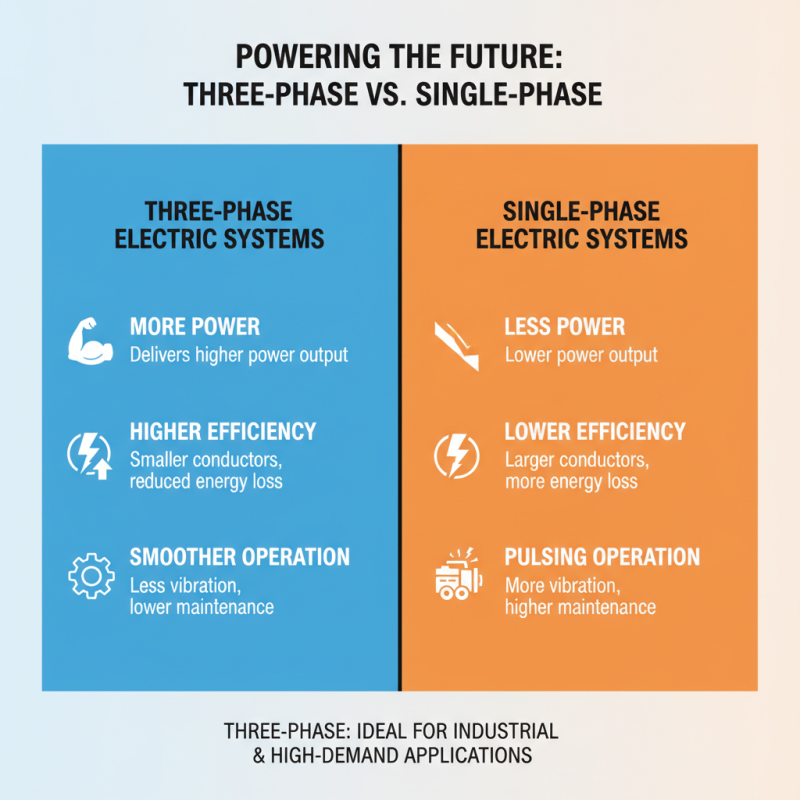
When comparing three-phase electric systems to single-phase systems, it becomes evident that the former offers numerous advantages, particularly in industrial and high-demand applications. One significant benefit of three-phase systems is their ability to deliver more power using smaller, lighter conductors. This results in increased efficiency and reduced energy losses. In addition, three-phase systems can operate equipment smoothly, minimizing vibrations and wear on machinery, which translates to lower maintenance costs over time.
Tips: When selecting a power system for industrial use, consider the power requirements of your equipment. A three-phase system might be more suitable for motors and heavy machinery, as it ensures a continuous and stable power supply.
Furthermore, three-phase systems provide a more balanced load distribution, which is crucial for preventing overloading in electrical installations. This balance not only extends the lifespan of equipment but also optimizes performance across various operations. In contrast, single-phase systems can struggle to handle high loads efficiently, leading to potential performance issues and increased risk of outages under heavy demand.
Tips: For residential applications or low-power needs, single-phase systems may suffice. However, if you anticipate future expansions or increased power demands, exploring three-phase options early on can save you time and resources.
Challenges and Considerations in Implementation
When implementing a three-phase electric system, several challenges must be considered to ensure an effective transition and operation. One of the primary challenges is the initial setup costs, which can be significantly higher than those associated with single-phase systems. The complexity of installation requires skilled labor and sophisticated equipment, which can be a barrier for smaller businesses or less experienced operators. Moreover, the infrastructure must be carefully designed to handle the load distribution effectively, necessitating thorough planning and investment in appropriate technologies.
Another critical consideration involves the management of harmonics and power quality issues that can arise from three-phase systems. While these systems provide smoother and more efficient power delivery, they can also introduce electrical noise and harmonics, which can affect sensitive equipment and lead to operational inefficiencies. Ensuring that the installation is equipped with adequate filtering and monitoring tools is essential for maintaining power quality. Additionally, continual maintenance and periodic assessments are necessary to keep the system running optimally and to mitigate any issues that may arise over time. Addressing these challenges can ultimately enable organizations to leverage the substantial benefits of three-phase systems effectively.
Understanding the Three Phase Electric System Benefits and Applications - Challenges and Considerations in Implementation
| Dimension | Description |
| Efficiency | Three-phase systems can deliver more power with less energy loss compared to single-phase systems. |
| Load Balancing | Allows for balanced loads across phases, improving performance and reducing the risk of overload. |
| Motor Performance | Three-phase motors run smoother and more efficiently due to constant torque delivery. |
| Installation Cost | Higher initial costs compared to single-phase systems but provides long-term savings through efficiency. |
| Complexity | More complex wiring and equipment required, necessitating skilled labor for installation and maintenance. |
| Applications | Used in industrial settings, large commercial buildings, and any application requiring substantial power. |
| Safety | While safer in some respects due to balanced loads, there are higher risks if improperly installed. |
Future Trends in Three Phase Electric Technology
The future of three-phase electric technology is poised for significant advancements, driven by the increasing demand for energy efficiency and the adoption of renewable energy sources. According to a recent report by the International Energy Agency, global electricity demand is expected to grow by 3% annually, underscoring the need for robust electrical systems that can handle varying loads while minimizing energy losses. Three-phase systems are inherently more efficient than single-phase systems, as they provide a constant power supply with reduced transmission losses, making them ideal for industrial applications. As industries move towards automation and digitalization, the reliance on three-phase systems will grow, facilitating higher performance and lower operational costs.
Moreover, innovations in smart grid technology and energy storage solutions are set to transform three-phase systems. A report from the International Council on Large Electric Systems notes that integrating advanced technologies into power distribution networks can enhance resilience and optimize energy flow. The rise of electric vehicles (EVs) and distributed energy resources further emphasizes the importance of three-phase systems, as they enable efficient charging infrastructure and renewable energy integration. As the electrical landscape evolves, the convergence of three-phase technology with artificial intelligence and machine learning will likely lead to predictive maintenance and real-time monitoring, creating a more reliable and responsive electric grid.
FAQS
: Three-phase systems offer increased power delivery with smaller conductors, higher efficiency, reduced energy losses, smoother operation of equipment, and balanced load distribution, which leads to lower maintenance costs and extended equipment lifespan.
A three-phase system is more suitable for industrial use, particularly for motors and heavy machinery, as it ensures a continuous and stable power supply for high-demand applications.
One should consider a three-phase system if they anticipate future expansions or increased power demands, especially in industrial settings. For residential or low-power needs, a single-phase system may suffice.
Three-phase systems provide a constant power supply with reduced transmission losses, making them inherently more efficient, especially for industrial applications where high performance is required.
Future trends include advancements driven by increased energy efficiency needs, the adoption of renewable energy sources, automation, digitalization, smart grid technology, and enhanced energy storage solutions.
The rise of electric vehicles necessitates efficient charging infrastructure, which is better supported by three-phase systems, highlighting their importance in modern electrical applications.
Artificial intelligence and machine learning will likely improve predictive maintenance and real-time monitoring in three-phase systems, making the electric grid more reliable and responsive.
Single-phase systems may struggle to handle high loads efficiently, which can lead to performance issues and increased risk of outages during heavy demand.
Balanced load distribution in three-phase systems helps prevent overloading in electrical installations, optimizing performance and extending the lifespan of equipment.
Global electricity demand is expected to grow by 3% annually, highlighting the need for robust electrical systems that can handle varying loads efficiently.
Conclusion
The "Three Phase Electric System" is a vital aspect of modern electrical engineering, designed to deliver more efficient power transmission and distribution than its single-phase counterpart. Its historical development demonstrates a significant evolution in electrical systems, facilitating industrial growth and technological advancements. The advantages of using a three-phase system include reduced conductor material, improved performance under load, and smoother power delivery, making it an ideal choice for various industrial and commercial applications.
In comparison to single-phase systems, three-phase systems provide greater reliability and efficiency, especially in high-demand environments. However, challenges in implementation, such as complexity and cost considerations, must be taken into account. As we look toward the future, advancements in three-phase electric technology promise enhanced efficiency and integration with renewable energy sources, showcasing the system's essential role in the evolving landscape of electrical power systems.