Inquiry
Form loading...
Picking the right prefabricated substationisn’t just about comparing prices or delivery dates. There's a lot more to it—like understanding the load capacity, site conditions, safety standards, and even future expansion plans. A good, reliable unit should match your project's voltage needs, Transformer ratings, protection requirements, and environmental factors. For example, if you're working in a dusty industrial area, you'll want something with a tougher enclosure. If you're near the coast, corrosion-resistant materials are usually a must.
Usually, experienced project teams kick things off with a detailed load study and a practical site survey. They check out transport routes, crane access, foundation sizes, cable entry points, and space for maintenance. These little details often make or break whether the substation will run smoothly after installation. Factory assembly can really help keep quality consistent, but only if the design data is spot-on. Rushing through the specs might lead to costly modifications once you're out in the field.
It’s a good idea to dig into the manufacturer’s engineering records, testing procedures, warranty info, and how quickly they respond to service needs. Ask to see inspection reports, temperature-rise test results, protection settings, and examples of similar projects they’ve done. A trustworthy supplier should be upfront about any limitations—no hiding behind fancy brochures. Keep in mind, every project involves some compromises. Going for a lower cost might mean fewer spare parts or less room for future expansion. On the flip side, choosing a higher capacity setup could bump up transport and foundation costs.
The key is finding the right balance between what you need right now and what you might need later on. Experience on-site really helps, too. And honestly, honest reviews make all the difference. Before making a final decision, it’s a smart move to compare the technical specs line by line with your actual operating conditions. When you pick the right Prefabricated Substation, it should be safe, easy to maintain, and reliable for long-term service—even if it’s not the cheapest option out there.
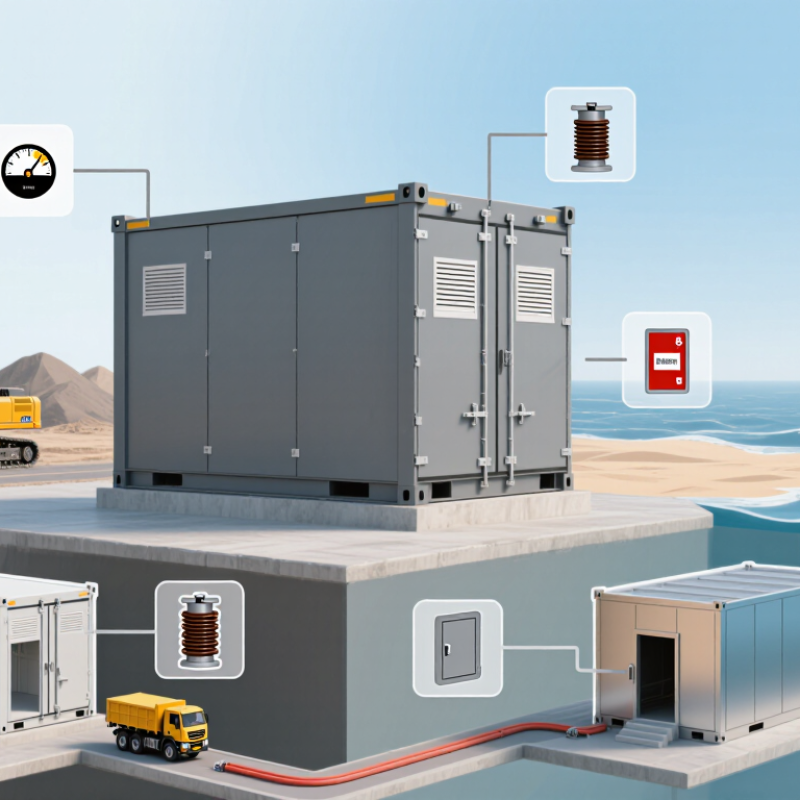
How to Choose the Best Prefabricated Substation?
Define the Purpose and Operating Conditions of the Prefabricated Substation
A prefabricated substation should begin with its duty, not its enclosure size. Define the load type, voltage levels, expansion plan, and required availability. Industrial motors, data centers, renewable plants, and residential networks create different demand profiles. The IEA Electricity 2024 report forecasts global electricity demand growth of about 3.4% annually from 2024 to 2026. This trend makes realistic load forecasting more important. Site data matters.
Record peak load, daily variation, fault level, and future capacity before selecting transformers or switchgear. IEC 62271-202 addresses prefabricated high-voltage and low-Voltage Substations, including service conditions and verification requirements. Check ambient temperature, altitude, humidity, dust, salt exposure, flooding, and seismic risk. A coastal installation may need stronger corrosion protection, while a high-altitude site may require derating. Protection settings must match the actual short-circuit study.
Do not rely only on a standard load estimate. It is a common mistake. Measure operating patterns where possible, and confirm assumptions with qualified engineers. The U.S. Department of Energy’s Better Buildings data shows that commercial electricity use varies significantly by building type and operating schedule. This supports using site-specific profiles rather than generic averages. Include access for maintenance, safe isolation, ventilation, fire separation, noise limits, and room for future feeders. Sometimes, the smallest substation is not the most economical choice.
| Application Purpose | Typical Voltage Level | TypicAl Transformer Rating | Recommended Enclosure and Cooling | Key Operating Conditions | Important Design Requirements | Recommended Selection Priority |
|---|---|---|---|---|---|---|
| Urban commercial building | 6–20 kV primary; 400/230 V secondary | 630–2,500 kVA | Compact metal enclosure; natural air cooling where permitted; low-noise transformer preferred | Limited installation space, public access, high load diversity, strict noise requirements | Small footprint, fire protection, safe cable access, low sound pressure, reliable ventilation | Safety, space efficiency, noise control, maintainability |
| Industrial plant | 6–35 kV primary; 400–690 V secondary | 1,000–6,300 kVA | Robust steel or concrete enclosure; forced-air cooling may be required for high ratings | Continuous operation, motor starting currents, dust, vibration, process-critical loads | High Short-Circuit Withstand, selective protection, harmonic assessment, arc-fault mitigation | Electrical reliability, protection coordination, thermal capacity, service access |
| Renewable energy collection station | 10–35 kV collection; low-voltage inverter side | 500–3,150 kVA per transformer unit | Outdoor weather-resistant enclosure; natural or forced-air cooling based on load profile | High solar radiation, outdoor exposure, remote location, variable and bidirectional power flow | UV-resistant materials, temperature derating, surge protection, remote monitoring, corrosion protection | Outdoor durability, remote operation, thermal performance, grid compatibility |
| Construction site or temporary power | 6–20 kV primary; 400/230 V secondary | 250–1,600 kVA | Transportable enclosure with lifting points; natural cooling for moderate loads | Frequent relocation, uneven ground, dust, rain, impact risk, rapidly changing loads | Skid or trailer compatibility, mechanical protection, simple connections, clear isolation points | Mobility, setup time, mechanical strength, ease of inspection |
| Data center or critical facility | 6–20 kV primary; 400/230 V secondary | 1,000–4,000 kVA | Indoor or weatherproof enclosure; forced ventilation or redundant cooling when required | Very high availability, low tolerance for outages, harmonic-producing loads, controlled indoor environment | Redundant supply paths, high-quality protection, temperature monitoring, low-loss transformer, maintainability without shutdown | Availability, redundancy, power quality, monitoring, safe maintenance |
| Mining, coastal, or corrosive environment | 6–35 kV primary; 400–1,000 V secondary | 500–3,150 kVA | Reinforced weatherproof enclosure; filtered or pressurized ventilation where appropriate | Salt mist, high humidity, conductive dust, vibration, temperature changes, restricted maintenance access | Corrosion-resistant coating, sealed cable entries, anti-condensation heaters, robust grounding, appropriate ingress protection | Environmental protection, mechanical durability, insulation reliability, service life |
| Rural distribution or utility feeder | 10–35 kV primary; 400/230 V secondary | 100–1,000 kVA | Outdoor compact enclosure; natural cooling generally suitable for standard ratings | Long feeder distances, lightning exposure, limited maintenance personnel, wide ambient temperature range | Surge protection, efficient transformer, clear fault indication, remote communications, easy replacement | Reliability, lightning protection, low maintenance, lifecycle cost |
Match the primary voltage with the incoming utility supply. Confirm the secondary voltage suits motors, lighting, and control equipment. Check frequency, insulation level, temperature, and local requirements. At 40°C, derating may be necessary.
Use measured demand rather than rough estimates. Review hourly loads, motor starting currents, production peaks, and future expansion. Leave practical spare capacity. Too much capacity increases cost and idle losses.
Compare radial, ring, and dual-source arrangements. Select protection devices through a coordination study. Confirm earthing, cable entry, metering, ventilation, and maintenance access. The best layout depends on operational needs.
Consider dust, moisture, heat, and outdoor exposure. Check enclosure seals and ventilation paths. A compact enclosure may look efficient. Cramped cable bends can create service problems.
Inspect grounding points, fire separation, emergency isolation, and protection from live parts. Check whether doors open outward when required. Clear labels help technicians act safely under pressure. Small inconsistencies matter.
Natural ventilation can reduce maintenance but may struggle in dusty locations. Forced-air cooling removes heat more strongly but adds fan failures. Check temperature sensors, airflow paths, and filter access. Heat leaves evidence.
Technicians should reach cable chambers, busbars, batteries, and control panels easily. Review the service route with tools and protective equipment. A narrow aisle may look acceptable on drawings. It may fail in practice.
Include equipment, testing, transport, installation, civil works, commissioning, and five-year maintenance. Compare cable routing and crane requirements. A low quotation can hide expensive site work. Details matter.
Request factory test records, calculations, quality procedures, and similar project references. Confirm responsibility for field changes and spare parts. Delivery includes approvals, manufacturing, testing, shipping, and site readiness. Promised dates are not guaranteed.
Reserve space for feeders, cable entries, and safe working clearance. Confirm that busbars, protection, foundations, and ventilation support additions. Modular equipment may reduce later disruption. Forecasts can be wrong.
Choosing the right prefabricated substation begins with a clear understanding of its purpose, operating environment, and expected electrical load. Consider the required voltage, capacity, transformer arrangement, protection devices, and overall electrical configuration to ensure reliable performance. The enclosure should also match local conditions, with suitable materials and protection against dust, moisture, corrosion, temperature changes, and other environmental challenges.
Safety, cooling, inspection, and maintenance access are equally important. A practical design should include effective protection systems, appropriate ventilation or cooling methods, and enough space for routine servicing. Before making a final decision, verify applicable standards, certifications, transportation and installation requirements, foundation conditions, and site compatibility. Finally, evaluate the total cost rather than focusing only on the purchase price. Supplier experience, product quality, delivery schedule, technical support, spare parts, and potential future expansion should all be included in the assessment. A carefully selected prefabricated substation can provide dependable power distribution, efficient installation, and long-term operational value.