
inquiry
Inquiry
Form loading...
0%

Picking out a 35kV Power Transformer isn’t just about crunching numbers like price, capacity, or delivery time. You’ve really gotta find the right fit for your specific network, how the load behaves, where you’re installing it, and what kind of maintenance it’ll need. In real-world projects, small assumptions can turn into costly headaches later on. Like, a transformer that works perfectly in a factory setting might totally flop when you put it in a coastal substation — different environment, different needs.

From actual experience, I can tell you that the nameplate power rating is just one piece of the puzzle. Engineers need to look at the voltage ratio, frequency, vector group, impedance, cooling method, Insulation level, and whether it has a tap changer — not to mention stuff like ambient temperature, altitude, humidity, dust, and how much space you've got. All of these things influence heat dissipation, protection settings, how long the transformer will last, and how safely you can install it.

And let’s not forget about the enclosure — it really matters. A dependable 35kv Transformer should come with clear test records, verified materials, and traceable quality controls. When you're shopping around, ask for routine test reports, temperature-rise data, partial discharge results, and relevant certifications. Just knowing the manufacturer’s experience with similar projects is helpful, but don’t go on reputation alone; ask for references from other industrial or utility setups that are similar to yours.

Of course, no selection process is perfect. A simple spreadsheet might miss things like transport limits, future expansion plans, or how easy it will be to get to it for emergency repairs. That’s why the best approach combines detailed calculations, on-site inspections, honest discussions with suppliers, and even some independent technical advice. Think of this guide as a practical roadmap — it highlights the key points in a way that helps you reduce avoidable risks. And it also points out common mistakes, because even seasoned pros sometimes accept incomplete info before they really understand what the transformer’s environment will be like in the long run.
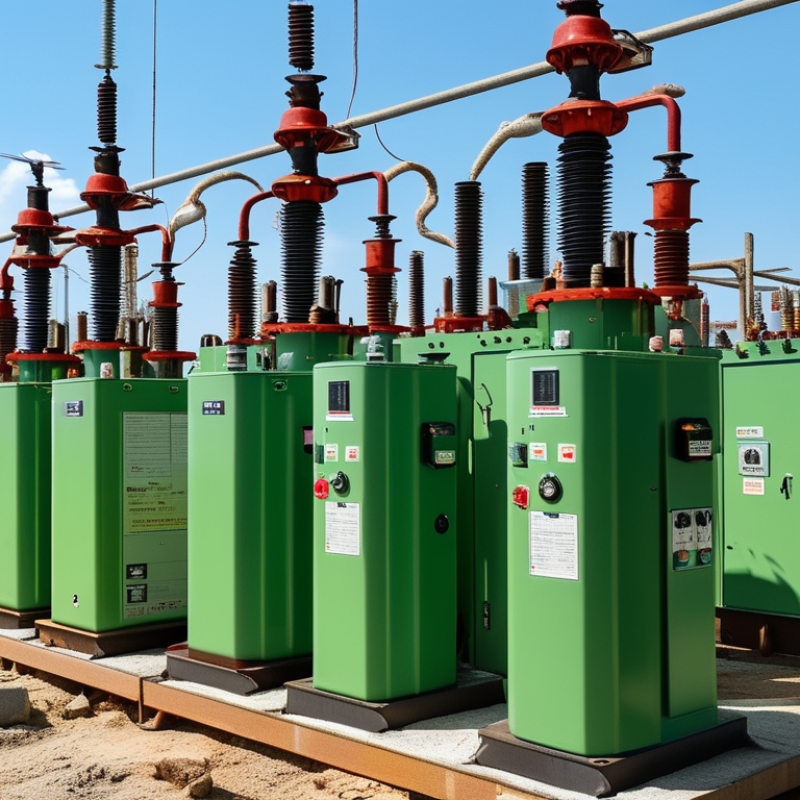
How to Choose a 35kV Power Transformer?

Define the Application, Load Profile, and Required Transformer Capacity

How to Choose a 35kV Power Transformer?

Define the application before comparing Transformer Prices or dimensions. A 35kV transformer for a factory may serve motors, furnaces, lighting, and sensitive control equipment. A utility substation may face a very different duty cycle. Record the incoming voltage, outgoing voltage, frequency, grounding method, and installation altitude. Outdoor exposure also matters. Rain, dust, salt, and winter temperatures affect enclosure design and insulation performance.

Build a load profile from actual operating records whenever possible. List each load in kilowatts, power factor, starting current, and operating hours. Large motors can create short voltage dips during startup. Welding equipment can produce uneven demand. Do not size only from connected load. Calculate maximum demand, then allow practical spare capacity for expansion and unusual operating conditions. A neat spreadsheet can still be wrong. Field measurements may reveal a higher evening peak.

For example, a site with a 900 kVA measured peak may need a 1,250 kVA unit after growth and starting allowances. Confirm short-circuit strength, impedance, cooling method, tap range, losses, and noise limits with the engineering team. For outdoor installations, inspect oil containment, access clearance, cable termination height, and maintenance space. The phrase 35kV 1250kv Factory Direct Outdoor Oil-Immersed Transformers | IEC Standard should never replace technical verification. Check the applicable IEC requirements, test certificates, protection settings, and local installation rules. I would also review the design after commissioning, because the original assumptions may not match real production.

Confirm the 35kV System Voltage and Essential Electrical Specifications

How to Choose a 35kV Power Transformer?

Confirming the actual 35kV system voltage is the first practical step. Do not assume a 35kV network always requires a 35kV equipment rating. Verify the line-to-line voltage, operating frequency, grounding method, and permitted voltage variation from approved utility documents. Check whether 35kV is nominal, maximum, or only a temporary operating level. This distinction affects insulation selection and safety margins. The transformer’s highest voltage for equipment must match the system design and applicable IEC 60076 requirements. Small errors here can become expensive.

Define the essential electrical specifications clearly. Calculate the required apparent power in kVA, including motor starting, future expansion, and uneven phase loading. Specify primary and secondary voltages, vector group, impedance, tap range, cooling method, and short-circuit withstand capability.

For outdoor installations, review altitude, ambient temperature, humidity, pollution, and lightning exposure. A 35kV transformer may need stronger insulation coordination in a coastal or industrial environment. Ask for routine and type test records. Inspect the nameplate carefully.

Power Transformer And Distribution Transformer serve different operating priorities.

A power transformer may emphasize high capacity and grid efficiency, while a distribution transformer often focuses on reliable local supply and manageable losses. In real projects, the load forecast is sometimes too optimistic. Recheck it. Confirm protection settings with the transformer impedance, and coordinate surge arresters, fuses, and grounding conductors before approval.

Select the Transformer Type, Cooling Method, and Insulation Class

How to Choose a 35kV Power Transformer?

Selecting a 35kV transformer starts with the installation environment, not only the rated capacity. Oil-immersed units suit outdoor substations and heavy continuous loads. They provide effective heat transfer and usually tolerate demanding operating conditions. Dry-type transformers fit indoor locations where fire safety, clean operation, and limited oil management matter. However, they can need stronger ventilation. Distribution Transformer And Power Transformer applications should not be treated identically. Load cycles, fault levels, space, and maintenance access change the correct design.

Cooling selection affects service life. ONAN cooling uses natural oil circulation and air movement. ONAF adds fans for higher loading. Check the site temperature, altitude, and expected overload duration before choosing.

Insulation selection requires more than naming Class F or Class H. Confirm the required insulation level, lightning impulse withstand, and thermal class under applicable standards such as IEC 60076. A 35kV system near coastal equipment may also need stronger humidity and contamination protection. I have seen specifications overlook altitude correction. That mistake can reduce real cooling margin.

Tips: Request loss data, temperature-rise limits, short-circuit withstand values, and routine test records. Compare sound levels at the property boundary. Inspect cable termination space carefully. Ask whether spare fans, gauges, and bushings are locally available. Leave room for improvement; the cheapest specification may become expensive after installation.

Evaluate Efficiency, Losses, Voltage Regulation, and Short-Circuit Strength

Choosing a 35kV power transformer requires more than checking its rated capacity. Efficiency, losses, voltage regulation, and short-circuit strength directly affect operating cost and network stability.

Start with the expected load profile. A transformer running near its rated load behaves differently from one serving fluctuating industrial equipment. Compare no-load losses and load losses at realistic demand levels. Even a few kilowatts of continuous loss can become expensive over years. During site reviews, I check temperature rise, cooling conditions, and the actual installation space. A clean datasheet cannot replace these observations.

Voltage regulation deserves careful attention. Excessive voltage drop may cause motors to heat, lamps to flicker, or sensitive controls to trip. Review impedance, tap-changer range, and the required secondary voltage under peak load. The phrase Power Transformer Distribution Transformer often hides two different duty profiles, so the application must be defined clearly. Do not rely on nominal voltage alone.

Short-circuit strength is equally important. Ask for the transformer’s short-circuit withstand duration, peak current capability, and tested mechanical design. The specified impedance influences fault current and coordination with protection devices. Lower impedance may improve voltage regulation, but it can increase fault severity. That trade-off is easy to overlook. I have seen projects where the selected rating looked correct, yet protection settings required major revisions. Recheck the assumptions. Evaluate efficiency at several loading points, verify losses independently, and request test records aligned with applicable technical standards.

How to Choose a 35kV Power Transformer? - Evaluate Efficiency, Losses, Voltage Regulation, and Short-Circuit Strength

Evaluation Item Candidate A Candidate B Candidate C Candidate D Selection Guidance
Typical Application Small industrial substation Commercial or utility distribution Medium industrial plant Large industrial or utility substation Match the transformer rating to the present load and the planned expansion margin.
Rated Capacity 5 MVA 10 MVA 20 MVA 31.5 MVA Allow adequate continuous loading without routinely operating at maximum thermal capacity.
High-Voltage Rating 35 kV 35 kV 35 kV 35 kV Confirm compatibility with the system's maximum operating voltage and insulation coordination.
Low-Voltage Rating 10.5 kV 10.5 kV 10.5 kV 10.5 kV Use the actual receiving-system voltage; common medium-voltage secondary ratings include 6.3, 10.5, and 11 kV.
Frequency 50 Hz 50 Hz 50 Hz 50 Hz The frequency must match the power system; a 50 Hz transformer should not be applied to a 60 Hz system without verification.
Cooling Class ONAN ONAN ONAN/ONAF ONAN/ONAF ONAF cooling can provide additional capacity, but fan control, noise, and auxiliary power should be assessed.
No-Load Loss at Rated Voltage 4.5 kW 7.0 kW 11.5 kW 16.5 kW No-load loss is present whenever the transformer is energized, even when the load is low.
Load Loss at 75°C 45 kW 82 kW 145 kW 215 kW Compare guaranteed load loss at the same reference temperature and rated current.
Total Loss at Full Load 49.5 kW 89.0 kW 156.5 kW 231.5 kW Total loss is the sum of no-load loss and load loss at the specified operating condition.
Estimated Full-Load Efficiency 99.02% 99.12% 99.22% 99.27% Efficiency is calculated from rated output divided by rated output plus total loss; verify the guaranteed-loss test values.
Impedance Voltage at Rated Current 6.0% 7.0% 8.0% 10.0% Higher impedance reduces prospective fault current but can increase voltage drop during starting and heavy loading.
Voltage Regulation at 0.8 Power Factor 4.8% 5.6% 6.4% 8.0% Lower regulation generally provides better load-voltage stability, subject to short-circuit and system requirements.
Tap-Changer Arrangement Off-circuit tap changer, ±2 × 2.5% Off-circuit tap changer, ±2 × 2.5% Off-circuit tap changer, ±2 × 2.5% On-load tap changer, ±8 × 1.25% Use an on-load tap changer when voltage must be regulated while energized and carrying load.
Short-Circuit Withstand Rating Thermal withstand: 3 s
Dynamic withstand: compliant with design duty
Thermal withstand: 3 s
Dynamic withstand: compliant with design duty
Thermal withstand: 3 s
Dynamic withstand: compliant with design duty
Thermal withstand: 3 s
Dynamic withstand: compliant with design duty
Require verification against the calculated system fault current, duration, peak asymmetrical current, and network X/R ratio.
Estimated HV Full-Load Current 82.5 A 165.0 A 330.0 A 519.6 A Calculated using three-phase current: I = S ÷ (√3 × V).
Short-Circuit Current Approximation at HV Terminals 1.38 kA 2.36 kA 4.13 kA 5.20 kA Approximation assumes an infinite upstream source and uses rated current divided by per-unit impedance; actual fault current may be lower.
Insulation Level, 35 kV Winding Power-frequency withstand: 70 kV
Lightning impulse: 170 kV
Power-frequency withstand: 70 kV
Lightning impulse: 170 kV
Power-frequency withstand: 70 kV
Lightning impulse: 170 kV
Power-frequency withstand: 70 kV
Lightning impulse: 170 kV
Confirm the required insulation level using the applicable grid standard, altitude, surge protection, and system grounding method.
Typical Vector Group Dyn11 Dyn11 Dyn11 YNd11 or Dyn11 Vector group must match parallel-operation, grounding, phase-shift, and protection requirements.
Load Profile Suitability Best for high annual load factor Suitable for mixed commercial load Suitable for variable industrial load Suitable for high-demand or expanding networks Evaluate annual energy loss, not only full-load efficiency; load loss varies approximately with the square of current.
Overall Assessment Economical for smaller loads Select the lowest total cost of ownership that satisfies capacity, regulation, fault-duty, and future-expansion requirements.
Representative engineering values for preliminary comparison only. Final transformer specifications should be confirmed through the project load-flow study, short-circuit study, insulation-coordination study, applicable IEC 60076 requirements, and the manufacturer's guaranteed routine and type-test data.

Check Installation Conditions, Safety Features, and Maintenance Requirements

How to Choose a 35kV Power Transformer?

Installation conditions should guide the transformer choice, not catalogue ratings alone. Check the site altitude, ambient temperature, humidity, dust, and available ventilation. A 35kV transformer in a coastal area may need stronger corrosion protection. Indoor units require adequate airflow and safe working clearances. Confirm the foundation can carry the transformer, oil containment, and accessories. Cable bending space matters too. Small layout errors become expensive later.

Safety features deserve close attention. For oil-filled transformers, consider pressure relief devices, oil-level indicators, temperature alarms, and gas-actuated protection. A fire-resistant enclosure or containment system may be necessary near buildings. Verify grounding connections, surge protection, door interlocks, and isolation arrangements against applicable electrical standards.

Never treat an alarm as decoration. It should connect to a tested response procedure. Protection settings must match the upstream and downstream equipment.

Maintenance requirements can change the real operating cost. Ask how easily technicians can inspect bushings, cooling fans, terminals, and protective relays. Oil sampling can reveal moisture, acidity, or abnormal gas formation before failure occurs. Schedule thermal imaging during loaded operation, and keep torque and test records. Field inspections often reveal blocked vents or loose connections.

A checklist can still miss them. Review it after commissioning, because the first version is rarely perfect. Allow safe access for de-energized maintenance and clearly mark every isolation point.

Compare Manufacturers, Compliance Standards, Warranty, and Total Cost

How to Choose a 35kV Power Transformer?

Choosing a 35kV power transformer starts with comparing manufacturers beyond the nameplate rating. Ask for verified factory test records, design references, and production capacity. A serious supplier explains winding materials, cooling class, insulation coordination, and tap-changer limits in plain language. Request at least three comparable quotations. Compare delivery dates, included accessories, commissioning support, and spare-part availability. The cheapest offer may omit marshalling cabinets, surge arresters, or oil testing. Read every line.

Compliance should match the project location and utility rules. Check applicable IEC 60076 or IEEE C57 requirements, local grid codes, environmental rules, and site-specific protection settings. Require routine, type, and special test documentation where relevant. Factory witness testing can reveal problems before shipment, especially leakage, ratio deviation, or abnormal losses. Do not accept a certificate without checking its scope and date. A document can look complete and still prove little. An independent inspector adds useful confidence, although it increases cost.

Warranty terms deserve the same attention as purchase price. Confirm duration, response time, covered parts, transport responsibility, and exclusions for installation errors or poor oil maintenance. Calculate total cost over the operating life, including no-load and load losses, energy use, cooling-fan power, oil sampling, downtime, insurance, and disposal. I would also price a failed-unit scenario. How quickly can a replacement arrive? A longer warranty is not automatically better. If claims require difficult evidence, its value may be limited. One practical weakness remains: energy-price and loading forecasts are uncertain. Use measured site data when possible, and document every assumption.

S(B)-M Series Three-Phase Oil-Immersed Transformers: Installation, Customization, and Factory Support Guide

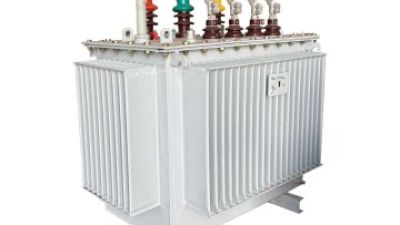
S(B)11/13/20/22-M Series three-phase oil-immersed transformers are designed for dependable power distribution in industrial facilities, commercial buildings, renewable-energy systems, and utility networks. The International Energy Agency’s *Electricity 2024* report projects global electricity demand to grow by more than 2.5% annually through 2026, increasing the need for efficient, durable distribution equipment. With carefully selected materials, advanced manufacturing, and optimized oil insulation, these transformers offer compact dimensions, reduced weight, low no-load and load losses, low partial discharge, and quiet operation.

Correct installation is essential for long service life. The foundation should be level and capable of supporting the transformer’s operating weight, while adequate clearance must be provided for ventilation, inspection, and maintenance. Before energizing, technicians should verify grounding, cable connections, oil level, protective devices, and insulation condition in accordance with applicable IEC 60076 requirements and local electrical regulations. Factory guidance can assist with inspection checklists, commissioning procedures, and operating documentation.

Customization supports different load profiles and site conditions. Specifications may be coordinated for rated capacity, voltage ratio, frequency, impedance, vector group, cooling configuration, enclosure requirements, and monitoring accessories. Factory engineers can review technical drawings, coordinate routine testing, and provide test certificates, packing guidance, installation support, and after-sales assistance. This combination of efficient design and structured technical service helps achieve stable, economical, and environmentally responsible power distribution.

FAQS

How should I choose between an oil-immersed and dry-type 35kV transformer?

Choose an oil-immersed unit for outdoor substations and heavy, continuous loads. Dry-type units suit indoor areas requiring clean operation and reduced oil management. Dry-type designs may need stronger ventilation. The site decides.

How does the cooling method affect transformer performance?

Natural oil and air circulation support normal loading in ONAN cooling. Fan-assisted ONAF cooling supports higher loading when required. Check ambient temperature, altitude, and overload duration before selecting cooling equipment. Do not guess.

What insulation details should be confirmed?

Confirm insulation level, lightning impulse withstand, and thermal class. Review applicable electrical standards, including IEC 60076 where relevant. Coastal sites may require stronger protection against humidity and contamination. Small omissions matter.

Which installation conditions can affect transformer selection?

Check altitude, temperature, humidity, dust, ventilation, and available working space. A coastal location may require corrosion-resistant protection. Confirm the foundation supports the transformer, accessories, and oil containment. Measure cable bending space carefully.

What safety features are important for an oil-filled transformer?

Consider pressure relief devices, oil-level indicators, temperature alarms, and gas-actuated protection. Buildings nearby may require fire-resistant enclosures or containment systems. Verify grounding, surge protection, door interlocks, and isolation arrangements. An alarm needs a tested response.

How can I compare transformer specifications beyond rated capacity?

Request loss data, temperature-rise limits, short-circuit withstand values, and routine test records. Compare sound levels at the property boundary. Review load cycles, fault levels, space, and maintenance access. The lowest price may not remain lowest.

What maintenance access should be planned?

Provide safe access to bushings, cooling fans, terminals, and protective relays. Leave enough room for de-energized maintenance and equipment removal. Mark every isolation point clearly. Blocked vents are easy to miss.

Which routine checks help identify developing problems?

Oil sampling can detect moisture, acidity, and abnormal gas formation. Use thermal imaging while the transformer carries load. Keep torque records, test results, and inspection notes. Review the checklist after commissioning. The first version is rarely perfect.

Conclusion

Choosing a 35kv Power Transformer requires a clear understanding of the project’s operating conditions and long-term requirements. Start by defining the application, expected load profile, future expansion plans, and required transformer capacity. Confirm the system voltage and key electrical specifications, including frequency, impedance, connection configuration, and voltage regulation range. The transformer type, cooling method, and insulation class should match the installation environment and duty cycle.

A complete evaluation should also consider efficiency, no-load and load losses, short-circuit strength, noise, and thermal performance. Check whether the installation site requires special protection against moisture, dust, fire, or temperature variations, and review safety features, inspection access, and maintenance needs. Finally, compare qualified manufacturers according to applicable compliance standards, testing capabilities, warranty terms, service support, delivery conditions, and total lifecycle cost. A well-selected transformer should provide reliable operation, safe maintenance, stable voltage performance, and economical service throughout its expected working life.
Ethan

Ethan

Ethan is a seasoned marketing professional at Jiangxi GUOXIANG Electric Power Equipment Co., Ltd., a national high-tech enterprise founded in 2016 and based in Jiangxi Province. With a profound expertise in integrated power solutions, Ethan plays a crucial role in bridging the gap between our......
Previous 5 Tips to Choose a Low Loss Oil Immersed Transformer