Choosing the right type of Power Transformer isn’t just a technical decision — it can really make a difference in how efficiently you use energy and keep costs down. I remember John Smith from Transformer Solutions Inc. once said, “Picking the right transformer is key to making sure everything runs smoothly.” That little quote really drives home how important it is to understand exactly what you need.
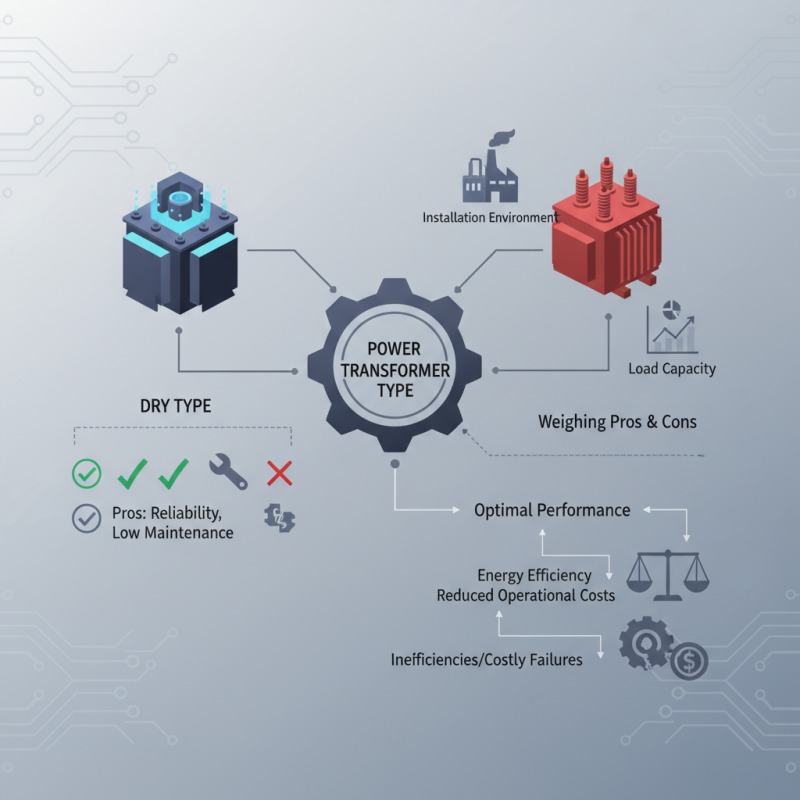
There are all sorts of transformers out there, each suited for different jobs. For instance, the Dry Type Power Transformer is pretty popular because it’s reliable and doesn’t need a ton of maintenance. But, like with anything, it’s not perfect — it has its own set of downsides. The tricky part is figuring out which one fits best, and sometimes it’s not obvious right away.
Lots of industries depend on these transformers, and each one has its own specific needs. You’ve got to think about things like where you’re installing it and how much load it needs to handle. Making a rushed decision here can lead to inefficiencies or, worse, costly failures down the line. That’s why understanding these factors is so crucial to picking the best power transformer for your setup.
Understanding Power Transformer Types: An Overview of Options
When choosing a Power Transformer Type, it’s crucial to understand the options available. Power transformers vary in design and function, impacting their efficiency and application. Two common types are step-up and step-down transformers. A step-up transformer increases voltage, while a step-down transformer decreases it. This basic distinction shapes their usage in various industries.
Another important factor is Insulation. Different power transformer types offer varying insulation materials. Some use oil, while others rely on dry types. Each option has its advantages and challenges. Oil-filled transformers are often more efficient but require careful management to prevent leaks. Dry transformers are safer, with less environmental risk, but may have lower efficiency.
Lastly, consider size and capacity. Larger transformers can handle higher loads but may not fit all spaces. In contrast, smaller models are more compact but may limit power output. Reflect on your specific needs. Each power transformer type has unique characteristics that may not align perfectly with your requirements. Careful evaluation is essential to find the best fit.
Power Transformer Types and Their Applications
Key Factors to Consider When Selecting Power Transformers
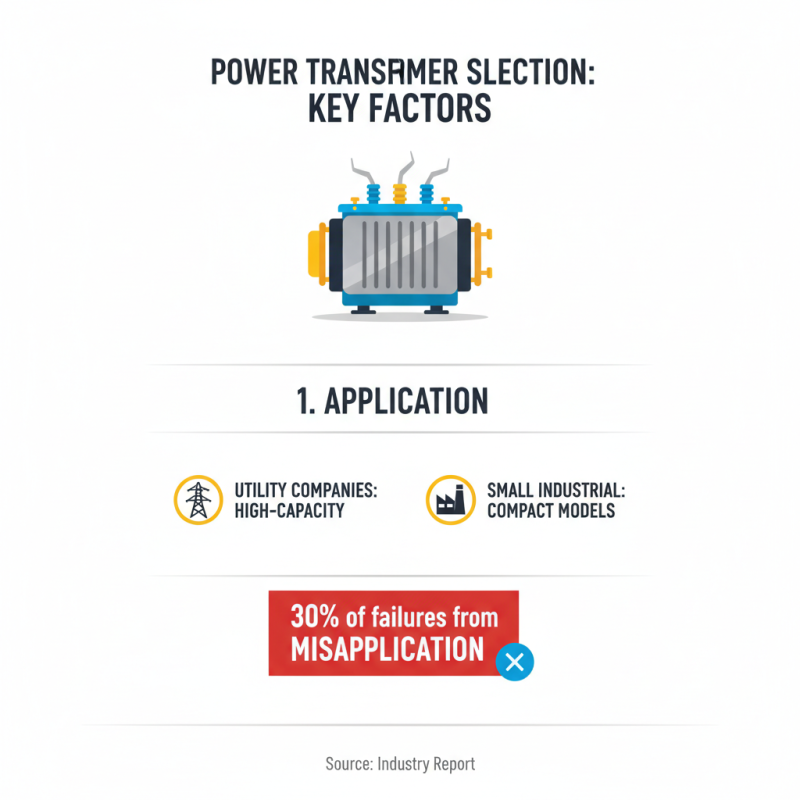
When selecting a power transformer, several key factors come into play. The first consideration is the application. Different industries have specific requirements. For example, utility companies often require high-capacity transformers, while smaller industrial applications may need compact models. According to a recent industry report, about 30% of transformer failures are due to misapplication. Ensuring the transformer aligns with your specific use is vital.
Another factor to consider is efficiency. A transformer’s energy loss can impact operational costs significantly. For instance, inefficient transformers can lead to loss rates up to 10%, as per a study by the International Energy Agency. You want to minimize energy loss while maximizing service life. In addition, consider the installation environment. Factors like temperature variations, humidity, and noise levels can affect performance.
Finally, don't overlook maintenance needs. Some transformers have higher maintenance costs that can escalate over time. An overlooked factor is the level of spare parts availability. Limited access can lead to long downtimes. Thus, assessing these elements carefully can lead to better investment decisions and enhanced operational reliability.
Voltage Ratings and Their Impact on Transformer Selection
When selecting a power transformer, voltage ratings play a crucial role. Different applications require different voltage levels. For instance, industrial settings may need high voltage transformers. This ensures that machinery operates efficiently. Meanwhile, residential areas typically utilize lower voltage ranges. Understanding these requirements is essential for making the right choice.
A mismatch in voltage ratings can lead to inefficiencies. For example, if a transformer operates below its rated voltage, it may overheat. This can cause premature failure. Conversely, using a transformer rated for higher volatile applications can result in inadequate performance. These issues highlight the importance of precise calculations. It's crucial to analyze both the supply and demand sides.
In many cases, users overlook these details. Some assume that one transformer fits all needs. This mindset can lead to costly mistakes. It's essential to revisit voltage requirements often. Changes in application or load might affect transformer selection. Regular assessments promote better performance and longevity.
Efficiency Standards: Comparing Traditional vs. Modern Transformers
Modern transformers are designed with improved efficiency standards compared to traditional types. These advancements not only save energy but also reduce operational costs. Traditional transformers often waste significant energy through heat loss. In contrast, modern transformers use advanced materials and design techniques to minimize these losses.
Consider the application of your transformer. Some settings demand high efficiency, while others may prioritize initial cost. It's crucial to evaluate your specific needs before making a choice. High-efficiency transformers often have a higher upfront cost, but they can pay off in the long run through lower energy bills.
**Tip:** Look for transformers with low no-load losses. These can help maintain efficiency even when not at full capacity.
Another aspect to consider is the environmental impact. Modern transformers are typically more eco-friendly, aligning with sustainability goals. However, assessing the initial investment is also necessary.
**Tip:** Analyze your local energy rates. They can significantly influence the overall cost-effectiveness of your transformer. Make sure to consider both short and long-term perspectives.
Why Choose the Right Power Transformer Type for Your Needs?
| Transformer Type | Efficiency (%) | Weight (kg) | Cost ($) | Lifespan (Years) |
| Traditional Oil-Immersed | 95 | 1000 | 15,000 | 30 |
| Dry Type Air-Cooled | 98 | 600 | 12,000 | 25 |
| Cast Resin | 97 | 700 | 13,500 | 20 |
| Multi-Winding | 96 | 800 | 16,000 | 35 |
Load Capacity Considerations for Optimal Performance
Choosing the right power transformer type is crucial for efficiency. Load capacity plays a pivotal role in this selection. When considering options, one must evaluate how much energy will be demanded. A transformer that can't handle the load will overheat and fail. It's essential to avoid underestimating future power needs.
Dry Type Transformer s are often chosen for their versatility. They are safer and easier to maintain than oil-filled types. However, they may not support larger loads efficiently. This could lead to performance issues. Choosing based solely on immediate needs might backfire. Future expansion and energy demands should always be anticipated.
The right transformer must align with operational requirements. This entails careful examination of both current and foreseen loads. Ignoring load capacity can lead to significant operational headaches. Seek out expert opinions if uncertain. The stakes are high when it comes to ensuring optimal performance. Reflect on your specific circumstances to find a suitable option.
The Role of Cooling Systems in Transformer Effectiveness
Cooling systems play a pivotal role in the effectiveness of power transformers. A well-functioning cooling system is crucial to maintain operational temperature. This helps prevent overheating and increases overall lifespan. For instance, oil-immersed transformers can operate at higher efficiencies due to their effective heat dissipation mechanisms.
Tips: Ensure regular maintenance checks on cooling systems. This proactive measure reduces the risk of failures. Many studies indicate that a transformer can lose about 10-15% efficiency if the cooling system is not adequate. This loss translates into increased operational costs over time.
When selecting a transformer, consider cooling options carefully. The 1000 Kva Dry Type Transformer may require additional cooling solutions compared to oil-filled types. Dry transformers often depend on ambient air to dissipate heat, which can be limiting under heavy loads. It’s essential to evaluate the environment and load conditions before settling on a specific transformer type.
Proper thermal management not only enhances performance but also ensures safety. An insufficiently cooled transformer can lead to unexpected failures. Data shows that nearly 25% of transformer failures result from thermal overload. Regular temperature monitoring can mitigate such risks.
Cost Analysis: Initial Investment vs. Long-term Savings in Transformers
When selecting a power transformer, the cost analysis plays a vital role. It's essential to balance initial investment with long-term savings. A study by the Electric Power Research Institute states that well-chosen transformer types can reduce operational costs by up to 20% over their lifecycle. For instance, a Three Phase Dry Type Transformer typically has a higher upfront cost but boasts lower maintenance expenses.
Investing wisely can lead to significant savings. Many operations overlook maintenance costs, leading to unexpected expenditures. Dry-type transformers, for example, often require less upkeep due to their robust design. Over ten years, this can add up to substantial savings. A poorly chosen transformer can lead to energy wastage, which companies cannot afford nowadays.
Tip: Always analyze the total cost of ownership, not just the initial price. Consider energy efficiency ratings and operational longevity. Investing in better technology today may mean higher costs, but the returns will materialize in lower electricity bills. Don't underestimate the impact of downtime. Minimizing disruptions can save businesses thousands. Choose wisely for a brighter, cost-efficient future.
Enhancing Energy Efficiency with GGJ Intelligent Reactive Power Compensation Panel for Modern Power Systems
In the modern era of power systems, the efficiency of energy usage becomes increasingly critical as industries seek to optimize their operations and minimize costs. The integration of intelligent technologies, such as reactive power compensation panels, is crucial in enhancing energy efficiency. By deploying advanced solutions, such as the low-voltage intelligent reactive power compensation cabinets, organizations can address inefficiencies that stem from harmonic disturbances and poor power factors, particularly in sectors such as electricity generation, metallurgy, and petrochemicals.
Research indicates that harmonics, often generated by non-linear loads, can lead to significant power losses and distortions within the power network. These losses may account for up to 10-30% of total energy consumption in industrial settings, underscoring the necessity of filtration solutions to maintain grid integrity. The intelligent reactive power compensation cabinets are engineered to tackle these issues effectively. They automatically manage shunt capacitor switching under varying conditions, filter harmful harmonics, and supply reactive power to enhance the overall power factor, thereby reducing energy losses and optimizing system performance.
Moreover, the market for intelligent power management systems continues to expand, driven by the need for reliable, efficient, and compliant energy solutions. As industries increasingly rely on advanced power systems, the implementation of intelligent reactive power compensation panels is essential. Such systems not only mitigate disruptions caused by harmonic series but also contribute to a sustainable energy future by ensuring cleaner and more efficient energy distribution.
FAQS
: Many different categories exist. These include electronics, home goods, and clothing. Seasonal items can also vary.
Look for detailed descriptions and images. Compare features according to your needs and preferences.
Evaluate your budget and the product's reviews. Think about durability and warranty options.
Most places provide a return option. Make sure you understand the terms and timelines. Read the fine print.
After purchase, you should receive a confirmation email. This often includes tracking information for your order.
Occasionally, items may arrive damaged or not as described. Check the customer service for resolution options.
Generally, credit cards, debit cards, and digital wallets are common. Always confirm specifics before checkout.
Most retailers offer review sections. Share your experiences honestly, whether positive or negative. Constructive feedback is valuable.
Conclusion
Choosing the right power transformer type is essential for ensuring efficient and reliable energy distribution. This article outlines various power transformer types, highlighting their specifications and applications to help users make informed decisions. Key factors, such as voltage ratings, efficiency standards, load capacity, and the effectiveness of cooling systems, play a crucial role in selecting the ideal transformer.
Additionally, a thorough cost analysis comparing the initial investment with long-term savings provides insight into the financial implications of different power transformer options. Understanding these considerations will lead to optimal performance and reliability in energy systems, ensuring that the chosen power transformer type meets specific operational needs effectively.