inquiry
Inquiry
Form loading...
0%

Picking out a power Transformer Manufacturer in 2026 isn’t just about checking out who’s got the biggest name or the highest capacity number. You really need to dig a little deeper—look into their engineering experience, the quality of their factories, how reliably they deliver, and whether they offer solid long-term support. This guide walks through some of the top players like Hitachi Energy, Siemens Energy, GE Vernova, TBEA, Hyundai Electric, Schneider Electric, and Toshiba Energy Systems. Keep in mind, each company’s strengths vary depending on whether you're dealing with utility projects, renewable energy setups, industrial needs, or commercial applications.

When choosing a supplier, it’s important to ask for traceable test records and clear warranty info. Practical technical details matter too—think about voltage ratings, Insulation design, cooling methods, impedance, noise levels, and the conditions they’re meant to operate under. Don’t forget about factory acceptance tests—they’re a big deal. And field support? Also pretty crucial. For example, a 220 kV transformer might look perfect on paper, but if installation gets delayed, your entire substation schedule could suffer. Things like regional service support, access to spare parts, and proven maintenance processes should be on your radar as well.

Plus, different types of transformer projects (like power vs. distribution) need different approaches for evaluation. Transmission transformers, for instance, usually focus on high-voltage stability and grid integration, whereas Distribution Transformers tend to prioritize efficiency, smaller size, and long-term cost savings. This overview aims to help folks compare manufacturers based on solid evidence instead of just marketing hype. Remember, no ranking is set in stone. A shortlist can still be off if you overlook local rules, climate conditions, transport logistics, or grid standards. It’s always smart for procurement teams to double-check every specification directly with the manufacturer. Having experience helps, sure, but asking the right questions? That’s what really makes the difference.

[Power Transformer And Distribution Transformer](https://www.gxtransformer.com/power-transformer-and-distribution-transformer) projects need their own evaluation methods, and this guide is here to help you navigate that whole process.
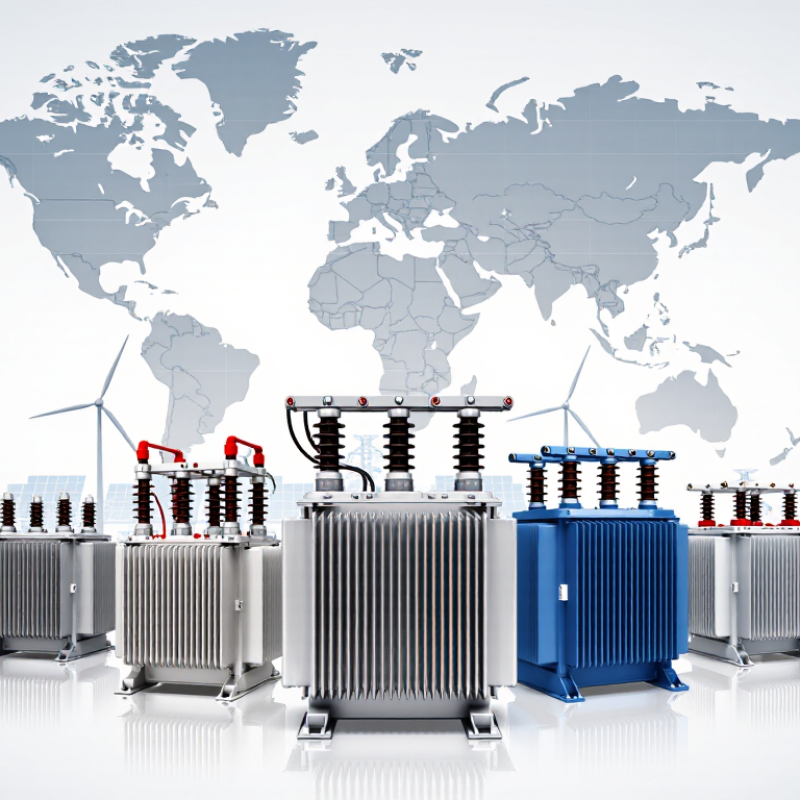
2026 Top Power Transformer Manufacturers for Global Buyers

Power Transformers: Definition, Types, and Global Applications

2026 Top Power Transformer Manufacturers for Global Buyers

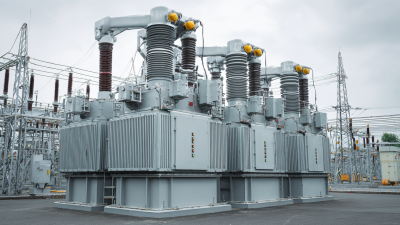
Power transformers transfer electrical energy between voltage levels through electromagnetic induction. Step-up units raise voltage for long-distance transmission, reducing losses. Step-down units lower voltage for factories, rail systems, hospitals, and homes. Distribution transformers serve the final network stage, while autotransformers support compact, high-capacity installations. IEC 60076 provides the main international framework for transformer design and testing.

Applications differ sharply by region. Renewable projects often require transformers near solar fields, wind farms, and battery storage sites. Industrial facilities need stable voltage under changing loads. The IEA’s Electricity Grids and Secure Energy Transitions report estimates annual grid investment must exceed 600 billion dollars by 2030, nearly double current levels. The IEA Electricity 2024 report also projects average global electricity-demand growth of 3.3% from 2024 to 2026. More demand means more transformers, but procurement quality still matters. The boundary between transmission and distribution equipment is not always tidy. That distinction deserves careful review.

Tips: Check rated power, voltage ratio, frequency, cooling method, insulation class, and local certification. Ask for tested losses, noise data, temperature-rise results, and maintenance records. Site altitude and climate can change performance. Oil-filled designs may suit outdoor substations, while dry-type units often fit indoor or fire-sensitive locations. A lower purchase price can conceal higher lifetime losses. Compare total ownership cost, not only the nameplate price.

Key Criteria for Evaluating Transformer Manufacturers in 2026

In 2026, global buyers should judge transformer manufacturers by evidence, not polished websites. Experience appears in practical design choices, such as cooling methods, winding materials, and protection settings. Ask for references from projects with similar voltage levels, climates, and load profiles. Then verify those references independently. For Distribution Transformer And Power Transformer projects, review documented design calculations and routine test results. These records should identify test equipment, dates, responsible engineers, and acceptance criteria. A capable factory can explain losses, temperature rise, insulation strength, and short-circuit performance clearly.

Manufacturing quality deserves direct attention. Buyers should examine coil winding areas, drying ovens, oil treatment systems, and final inspection procedures. Request traceability for steel, insulation paper, bushings, and accessories. Reliable manufacturers also provide realistic production schedules, spare-parts plans, and local technical support. Check whether their quality system follows recognized international standards and whether certificates remain valid. An audit is useful, but no audit is perfect. Photos can hide weaknesses. I would still inspect a finished unit before shipment when the project is critical. Energy efficiency, noise limits, fire safety, transport protection, and maintenance access should appear in the contract. Compare total ownership cost, not only the initial quotation. The cheapest offer may create higher losses, delays, or service expenses later. Some evaluations remain uncertain, especially when operating data is incomplete. That uncertainty should be recorded, discussed, and priced honestly.

Leading Power Transformer Manufacturers by Region and Market Focus

In 2026, global buyers should assess power transformer manufacturers by region and application, not by production volume alone. The International Energy Agency’s Electricity 2024 report projects global electricity demand will grow by about 3.4% annually through 2026. That growth is increasing orders for grid, renewable-energy, and industrial equipment.

North American manufacturers often focus on utility resilience, wildfire exposure, and shorter delivery routes. The U.S. Department of Energy’s 2024 transformer supply-chain assessment reports that distribution transformer lead times have expanded from months to more than a year in some cases.

Europe places stronger emphasis on grid modernization, offshore wind, and efficiency regulations. In Asia-Pacific, large factories commonly serve transmission networks, solar parks, and export markets. Middle Eastern and African buyers may prioritize high-temperature designs, desert protection, and service access. Latin American projects often require flexible voltage ratings and local installation support.

Power Transformer Distribution Transformer specifications should be reviewed separately. A 220 kV unit serving a substation cannot be judged like a compact rural transformer. Buyers should compare tested losses, insulation performance, factory inspection records, spare-parts planning, and field-service experience. The IEA estimates that annual grid investment must rise to more than USD 600 billion by 2030 to meet transition needs. That is a demanding benchmark.

A ranking is never clean. Price still attracts attention, but cheap equipment can create expensive delays. Regional manufacturing strength also changes quickly, so procurement teams should verify current capacity rather than trust an old supplier list.

Comparing Transformer Technologies, Ratings, and Product Capabilities

Global buyers are comparing transformer capabilities under rising grid pressure. The IEA’s Electricity 2024 report expects global electricity demand to grow by roughly 3% annually through 2026. Its Grids and Secure Energy Transitions report also says annual grid investment must exceed 600 billion dollars by 2030. This makes rating accuracy and lifecycle performance more important than a simple purchase price.

Oil-immersed transformers remain practical for high-capacity substations, often using ONAN or ONAF cooling. Dry-type units suit indoor sites, hospitals, and commercial buildings where fire safety matters. Ester-filled designs can offer improved fire performance and reduced environmental risk. Amorphous-core models may lower no-load losses, although their higher initial cost needs careful calculation. Ratings should match voltage, kVA or MVA load, impedance, frequency, altitude, and ambient temperature. Small details matter.

IEC 60076 testing should cover temperature rise, dielectric strength, losses, partial discharge, and short-circuit withstand. A credible supplier should provide routine and type-test evidence, not vague efficiency claims. The U.S. Department of Energy identifies distribution transformers as a significant equipment category for grid efficiency and supply-chain planning. However, published data can hide installation differences. A transformer performing well in a factory test may behave differently beside a dusty coastal substation. Buyers should request sound levels, cooling curves, service intervals, spare-part plans, and realistic lead times. The cheapest option is sometimes expensive later.

2026 Top Power Transformer Manufacturers for Global Buyers - Comparing Transformer Technologies, Ratings, and Product Capabilities
The profiles below represent common capability bands offered by leading international transformer manufacturers. No company or brand names are shown. Ratings are typical industry ranges and must be confirmed against the supplier’s latest technical datasheet, tender specification, and local grid requirements.
Anonymous Capability Profile Primary Product Focus Core Transformer Technology Typical Rated Power Typical Voltage Class Cooling and Construction Insulation and Fluid Options Typical Application Strengths Common Compliance Frameworks Buyer Evaluation Considerations
Profile A
Ultra-High-Voltage Grid Specialist
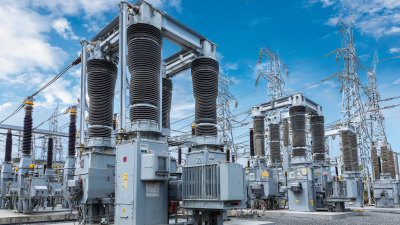
Large power transformers and autotransformers Three-phase core-form design; on-load tap changer; controlled field-drying and vacuum processing 100–1,200 MVA per unit Up to approximately 550 kV class ONAN, ONAF, OFAF or ODAF; conservator or sealed-tank configuration Mineral insulating oil; ester fluid available for selected designs; cellulose pressboard and paper insulation Transmission substations, interconnections, generation evacuation, renewable-energy hubs IEC 60076 IEEE C57 IEC 60214 Review transport limits, short-circuit withstand, seismic design, bushing interfaces, factory test scope, and spare-parts strategy.
Profile B
High-Voltage Network Supplier
Power transformers for transmission and sub-transmission networks Core-form oil-immersed transformer with off-circuit or on-load tap changing 20–500 MVA per unit 66–245 kV class ONAN, ONAF and OFAF cooling; radiator banks with detachable isolation valves Mineral oil or natural ester; sealed or conservator tank systems Utility substations, industrial grids, data-center campuses, railway power systems IEC 60076 IEEE C57.12 IEC 60071 Compare guaranteed no-load and load losses, impedance tolerance, tap range, noise level, accessories, and service coverage.
Profile C
Renewable Integration Specialist
Grid transformers and collector-substation transformers Oil-immersed step-up transformer designed for variable renewable generation and frequent loading changes 10–400 MVA per unit 33–245 kV class ONAN/ONAF or ONAF/OFAF; optional forced-oil and forced-air stages Mineral oil, natural ester, or synthetic ester depending on fire and environmental requirements Solar farms, wind farms, battery-storage plants, hybrid renewable projects IEC 60076 IEEE C57.159 IEC 61400 interface requirements Check harmonic capability, cyclic-load profile, inverter fault contribution, energization studies, and compatibility with collector voltage.
Profile D
Industrial Process Transformer Supplier
Furnace, rectifier, converter, and high-current process transformers Special-purpose oil-immersed transformer; multi-winding, phase-shifting, or rectifier-duty configuration 5–250 MVA per unit Up to approximately 220 kV class ONAN, ONAF, OFAF or water-cooled heat-exchanger systems Mineral oil or ester fluid; reinforced insulation for harmonic and thermal stresses Steel mills, electrolytic plants, mining, traction substations, large industrial drives IEC 60076 IEEE C57.18 IEC 61378 Validate harmonic spectrum, duty cycle, DC bias, phase displacement, impedance requirements, cooling redundancy, and maintenance access.
Profile E
Distribution Transformer Specialist
Utility and commercial distribution transformers Single-phase or three-phase oil-immersed distribution transformer; conventional or amorphous-core option 25–5,000 kVA per unit Up to approximately 36 kV class ONAN; hermetically sealed tank or conservator tank Mineral oil, natural ester, or silicone fluid for selected applications Urban distribution, commercial buildings, rural networks, utility replacement programs IEC 60076-1 IEC 60076-11 IEEE C57.12.00 Compare total owning cost, energy-efficiency class, no-load loss, sound level, dimensions, corrosion protection, and local type-test requirements.
Profile F
Dry-Type and Indoor Substation Supplier
Cast-resin and ventilated dry-type transformers Cast-resin or VPI dry-type construction; aluminum or copper windings; optional enclosure and temperature monitoring 100–20,000 kVA per unit Up to approximately 36 kV class AN or AF; natural-air or forced-air cooling Epoxy resin, vacuum-pressure-impregnated insulation, Class F or Class H thermal systems Indoor substations, hospitals, tunnels, high-rise buildings, offshore and fire-sensitive facilities IEC 60076-11 IEEE C57.12.01 IEC 60529 Assess fire behavior, partial discharge, enclosure IP rating, altitude derating, ventilation, acoustic performance, and installation clearance.
Profile G
Compact E-House and Modular Grid Supplier
Packaged substations, skid-mounted transformers, and mobile units Factory-integrated transformer, medium-voltage switchgear, protection, controls, and auxiliary systems 1–100 MVA per package Up to approximately 145 kV class Oil-immersed or dry-type transformer; modular forced-air systems where required Mineral oil, ester fluid, or cast-resin insulation depending on package design Mining, temporary substations, data centers, emergency replacement, remote renewable sites IEC 60076 IEC 62271 IEC 61439 Confirm lifting points, shipping dimensions, plug-and-play interfaces, protection coordination, commissioning scope, and weatherproofing.
Profile H
Digital Monitoring and Asset-Life Specialist
Power and distribution transformers with advanced condition monitoring Oil-immersed transformer integrated with online dissolved-gas monitoring, fiber-optic temperature sensing, and digital diagnostics 10–500 MVA per unit 33–245 kV class ONAN, ONAF, OFAF or ODAF; redundant fans and pumps available Mineral oil or ester fluid; online oil-quality and moisture monitoring options Critical substations, data centers, offshore wind, utilities implementing predictive maintenance IEC 60076 IEC 60599 IEEE C57.104 IEC 61850 Evaluate sensor accuracy, communications protocol, cybersecurity, alarm logic, data ownership, analytics support, and lifecycle service model.

Technical reference note: IEC 60076 covers power transformers; IEC 60076-11 covers dry-type transformers; IEC 60214 covers tap-changers; IEC 60599 and IEEE C57.104 address dissolved-gas analysis; IEC 61850 is commonly used for substation communication systems. Actual performance depends on the project specification, ambient conditions, altitude, frequency, duty cycle, short-circuit level, and applicable national standards.

International Standards, Certifications, and Quality Assurance

For global buyers, a Power Transformer is more than a nameplate rating and delivery date. The IEA Electricity 2024 report expects worldwide electricity demand to grow by an average of 3.4% annually from 2024 to 2026. That growth increases pressure on grid equipment, but speed should not replace verification. Manufacturers should design and test units under the IEC 60076 series, while projects in North America may also require IEEE C57 requirements. Buyers should request traceable drawings, material records, and factory acceptance test results.

Quality assurance becomes visible in small details. Inspect the sealed test reports, not only the certificate folder. Routine checks should cover winding resistance, voltage ratio, impedance, losses, insulation resistance, and dielectric strength. An ISO 9001-certified quality system supports controlled processes, while ISO/IEC 17025 accreditation strengthens laboratory credibility. The U.S. Department of Energy’s 2024 grid supply-chain review also highlights transformer lead-time and manufacturing constraints. Longer queues make early technical approval essential.

Certificates are useful, but they are not magic. A certificate may confirm a system, not every individual transformer. Buyers should compare test values against the purchase specification and require independent witnessing for critical projects. Oil samples should arrive sealed, labeled, and linked to the unit serial number. One overlooked bushing detail can delay energization. Even experienced teams miss things. That is why design reviews, inspection hold points, and documented corrective actions remain necessary.

How Global Buyers Can Select and Purchase the Right Manufacturer

Selecting the right manufacturer begins with your operating conditions, not a catalogue price. Define voltage levels, capacity, frequency, cooling method, installation altitude, and expected load cycles. For a Power Distribution Transformer, ask whether the design suits your network and climate. A unit near a coastal substation may need stronger corrosion protection than one installed inland.

Request verifiable evidence. Review routine and type-test reports, production records, quality certifications, and recent project references. A serious manufacturer should explain losses, temperature rise, insulation levels, delivery dates, and warranty limits clearly. Visit the factory if the order is large. Inspect winding areas, drying equipment, testing rooms, and packing methods. Photos are useful, but they are not proof. I would not rely on an attractive presentation alone.

Tips: Compare total ownership cost, not only the purchase price. Check spare-part availability, remote technical support, commissioning assistance, and response times. Confirm payment milestones and inspection rights in writing. Ask for a sample inspection plan before production begins. Small details matter.

During supplier evaluation, compare identical specifications across manufacturers. Otherwise, a cheaper offer may simply exclude accessories, protection devices, or required testing. Request a clear bill of materials and dimensional drawing. Confirm transport limits, lifting points, oil handling, and site access early. A manufacturer may be technically capable but still unsuitable for your schedule. No supplier is flawless, so document open issues and judge how honestly they address them. That response often reveals more than a polished sales meeting.

SBH Hermetically Sealed Oil-Immersed Power Transformers: Benefits, Applications, and Selection Guide

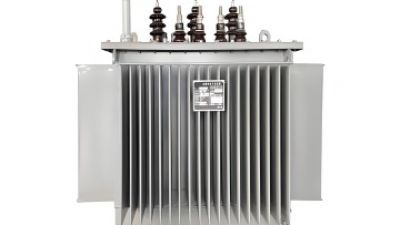
Hermetically sealed oil-immersed power transformers provide dependable power distribution while protecting internal components from moisture, dust, and other contaminants. Their fully welded tanks isolate the insulating oil from the outside atmosphere, helping slow oil aging, prevent core corrosion, and reduce maintenance requirements. With service life exceeding 20 years under suitable operating conditions, the SBH15/21/25-M Series is designed for stable, long-term performance in modern electrical networks.

Using amorphous alloy cores, high-quality insulation, and vacuum oil-filling technology, these transformers achieve low no-load losses and reduced operating noise. No-load loss can be 15%–20% lower than that of conventional silicon-steel transformers, supporting compliance with Class I energy-efficiency requirements. The series covers voltage levels from 10 kV to 35 kV and capacities from 50 kVA to 2500 kVA, allowing users to select a suitable model according to load demand, network voltage, installation conditions, and future expansion plans.

The transformers are well suited to urban distribution networks, industrial parks, high-rise buildings, commercial facilities, and other locations where reliability, space efficiency, and simplified maintenance are important. Their sealed construction is especially useful in environments with high humidity, dust, or fluctuating weather conditions, while the low-loss design can help reduce energy consumption throughout daily operation.

FAQS

How should buyers compare power transformer manufacturers in 2026?

Compare regional expertise, application experience, testing quality, delivery capacity, and service support. Production volume alone can mislead.

Why does regional focus matter when selecting a manufacturer?

North American projects may need wildfire resilience and shorter routes. Desert projects may require cooling and dust protection.

What applications commonly require large power transformers?

Large units support substations, transmission networks, renewable-energy parks, and heavy industrial facilities.

Which technical documents should buyers request?

Request drawings, material records, factory test results, inspection plans, and documented corrective actions.

What tests are important before transformer delivery?

Check winding resistance, voltage ratio, impedance, losses, insulation resistance, and dielectric strength.

Are certificates enough to prove transformer quality?

No. Certificates describe systems, not always individual units. Compare actual test values with the purchase specification.

How can buyers reduce delays caused by long lead times?

Approve technical designs early. Reserve inspection dates and confirm factory capacity before signing the purchase order.

What details deserve special attention during inspection?

Inspect bushings, sealed oil samples, labels, serial numbers, and test records. Small omissions can delay energization.

How should buyers judge a low-priced transformer?

Examine total project cost, delivery risk, losses, spare parts, and field service. Cheap equipment may become expensive later.

What should procurement teams reconsider before final approval?

Do not trust an old supplier list blindly. Capacity changes quickly, and experienced teams still overlook small details.

Conclusion

This guide provides global buyers with a practical overview of the power transformer industry in 2026, beginning with the definition, main types, operating principles, and applications of transformers across utility, industrial, renewable energy, and infrastructure projects. It explains how to evaluate manufacturers by examining engineering expertise, production capacity, delivery performance, customization capabilities, financial stability, after-sales service, and proven project experience in relevant markets.

The article also compares transformer technologies, voltage ratings, insulation systems, efficiency levels, cooling methods, and product configurations to help buyers match equipment with specific operational requirements. It highlights the importance of international standards, testing procedures, certifications, factory inspections, traceability, and quality assurance throughout the supply chain. Finally, it outlines a structured purchasing process covering technical specifications, lifecycle costs, installation support, warranties, logistics, risk assessment, and long-term maintenance, enabling buyers to select a reliable manufacturer and secure safe, efficient, and cost-effective transformer solutions.
Isabella

Isabella

Isabella is a dedicated marketing professional at Jiangxi GUOXIANG Electric Power Equipment Co., Ltd., where she has been instrumental in shaping the company’s online presence since its establishment in 2016. With a deep understanding of the company's extensive range of integrated power solutions,......
Previous How to Choose a 35kV Power Transformer?